


M&A Essentials: Landmark Deals, Top Advisors, and Deal Playbooks

    M&A Essentials: Landmark Deals, Top Advisors, and Deal Playbooks

    54 min read
    20 stories
    Featuring:LVMHGoogleMetaPfizerAB InBevGoldman SachsMorgan StanleyLazardWachtell LiptonMicrosoftVodafoneMannesmannStellantisKraft HeinzArcelorMittalActivision BlizzardHuaweiBernard ArnaultMark ZuckerbergMartin LiptonLakshmi MittalWarren BuffettHostile takeoversAntitrustSpin-offs and carve-outs

    Introduction

    Vodafone's $183 billion hostile takeover of Mannesmann in 2000 remains the largest deal ever attempted. Microsoft's $68.7 billion acquisition of Activision Blizzard in 2023 ran a three-continent antitrust gauntlet for 21 months before closing. Google bought Wiz for $32 billion in 2026, the largest cybersecurity acquisition in history. These are the events that reshape industries in a single Monday-morning press release, and this twenty-story collection walks through the mechanics, the personalities, and the playbooks behind them.

    Four threads run through the collection. Strategic acquirers (Google, Meta, Pfizer, LVMH, AB InBev) show how serial M&A can build dominance industry by industry. Wall Street advisors (Goldman Sachs, Morgan Stanley, Lazard, Wachtell Lipton) show how the advisory side quietly shapes terms, timing, and defense tactics. Landmark combinations (Vodafone-Mannesmann, PSA-Fiat Chrysler, Kraft-Heinz, ArcelorMittal) show what goes right and what breaks after the announcement. And explainers on the full taxonomy of deal structures, antitrust review, spin-offs, and fairness opinions show how the machinery actually moves.

    Whether a deal like Disney-Fox or Kraft-Heinz really created value usually comes down to what happens in years three through five, long after the press release fades. That's the theme most of these stories revolve around.

    M&A (Mergers and Acquisitions)

    The set of transactions in which one company acquires another, combines with one, or divests part of itself. M&A covers hostile and friendly deals, cross-border and domestic, mergers of equals and bolt-on acquisitions, as well as breakup structures like spin-offs and carve-outs.

    01 / 20

    The Cross-Border M&A Strategy That Shaped LVMH’s Global Luxury Dominance

    The Cross-Border M&A Strategy That Shaped LVMH’s Global Luxury Dominance

    Inside LVMH’s global expansion strategy through high-profile acquisitions of heritage brands like Bulgari and Tiffany & Co., using M&A to cement its leadership in luxury.

    Over the past two decades, LVMH Moët Hennessy Louis Vuitton has transformed itself from a Paris-based fashion house into the undisputed global leader in luxury goods. At the heart of its strategy has been a deliberate and well-executed campaign of cross-border mergers and acquisitions, with landmark deals like Bulgari in 2011 and Tiffany & Co. in 2021 anchoring its expansion.

    In 2011, LVMH acquired a majority stake in Italian jewelry house Bulgari for approximately €3.7 billion. The deal was framed as a family partnership, with the Bulgari family exchanging its controlling interest for LVMH shares. It marked LVMH’s largest acquisition at the time and its first major move into high jewelry, a segment where it had previously lagged behind competitors like Richemont. Bulgari brought heritage, craftsmanship, and strong brand equity, which LVMH leveraged through expanded retail distribution and global marketing campaigns.

    That transaction would be eclipsed nearly a decade later. In late 2019, LVMH announced its intention to acquire Tiffany & Co., the iconic American jeweler founded in 1837, for $16.2 billion. It was the largest luxury sector acquisition in history. The rationale was clear: Tiffany offered a dominant U.S. retail footprint, rich brand legacy, and underutilized growth potential in Asia, particularly China.

    The deal faced turbulence in 2020 due to the COVID-19 pandemic. LVMH attempted to withdraw, citing changing market conditions and political interference. Tiffany responded with a lawsuit in Delaware, initiating a high-profile legal battle. Eventually, the two sides renegotiated the purchase price to $15.8 billion, and the deal closed in January 2021.

    For LVMH, these acquisitions were not mere brand trophies: they were strategic growth engines. Under Bernard Arnault’s leadership, LVMH has consistently pursued brands that align with its long-term vision: cultural relevance, global recognition, and the potential for operational improvement under the group’s stewardship. With over 75 maisons across fashion, watches, jewelry, wines, and perfumes, LVMH’s model focuses on preserving each brand’s creative independence while providing financial and managerial resources to scale globally.

    Cross-border M&A has been central to this vision. While other luxury groups have expanded cautiously, LVMH has executed deals across Europe, the U.S., and Asia, using acquisitions to diversify geographically and by category. Deals like Rimowa (2016) in high-end luggage and Belmond (2019) in luxury hospitality further illustrate this multidimensional strategy.

    Crucially, LVMH has demonstrated a disciplined post-merger integration process. Following its acquisition, Bulgari’s profitability reportedly tripled under LVMH’s ownership. For Tiffany, the group moved quickly to refresh brand positioning, update store formats, and expand high jewelry offerings, all while retaining the house’s distinct American identity.

    These acquisitions also show how regulatory, legal, and cultural navigation is vital in luxury M&A. The Tiffany saga highlighted the growing complexity of cross-border deals, especially in politically sensitive times. Still, LVMH’s persistence reflected its conviction that strategic targets are worth fighting for.

    In retrospect, LVMH’s acquisition-led growth model has helped it stay ahead in a fiercely competitive, brand-driven industry. By identifying undervalued or underperforming icons and reinvigorating them, LVMH has reshaped global luxury: one legendary maison at a time.

    02 / 20

    How Google Used Acquisitions to Build Category Leadership in Tech

    How Google Used Acquisitions to Build Category Leadership in Tech

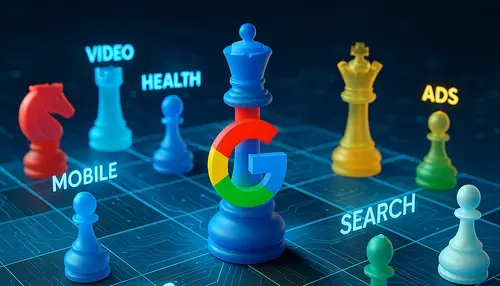
    Google's decades-long M&A strategy transformed acquisitions like Android, YouTube, and Fitbit into cornerstones of its dominance in mobile, video, and wearables.

    Over the past two decades, Google has executed one of the most impactful acquisition strategies in modern business, using targeted M&A to enter, expand, and often dominate new product categories. From buying Android in 2005 to acquiring YouTube in 2006 and Fitbit in 2021, the company’s portfolio-building has reshaped entire industries, often before rivals fully recognized the stakes.

    The acquisition of Android Inc. in 2005 for an estimated $50 million is widely seen as one of the most successful tech deals in history. At the time, Android was a little-known startup working on a mobile operating system. Google, recognizing the strategic importance of mobile computing, brought Android’s team into its fold and developed it into a robust, open-source OS. The goal was to ensure Google’s services remained accessible regardless of who controlled the smartphone hardware.

    Launched officially in 2008, Android rapidly scaled through adoption by handset makers like HTC, Samsung, and LG. By 2011, Android had become the most widely used mobile OS globally, providing a critical counterweight to Apple’s iOS and ensuring Google’s dominance in mobile search, maps, ads, and apps. Today, Android powers over 3 billion devices worldwide and is foundational to Google’s mobile strategy.

    In 2006, just a year after acquiring Android, Google paid $1.65 billion for YouTube, then a fast-growing but unprofitable video-sharing platform. The deal initially raised eyebrows due to YouTube’s modest revenue and legal exposure over copyright infringement. But Google bet that video would become a dominant form of online content, and that its ad infrastructure could eventually monetize it.

    Under Google’s ownership, YouTube retained its brand and user-driven ethos while gaining access to Google’s backend, analytics, and global reach. YouTube not only became the world’s largest video platform but also a massive advertising engine, contributing billions annually to Alphabet’s top line. As of 2023, YouTube surpassed 2.5 billion logged-in monthly users and was a market leader in both entertainment and creator monetization.

    Google continued expanding through strategic acquisitions. In 2012, it acquired Motorola Mobility for $12.5 billion to secure mobile patents and better integrate hardware with Android. Though Motorola was later sold, the IP portfolio and experience helped lay the groundwork for future Pixel devices.

    In 2019, Google announced its $2.1 billion acquisition of Fitbit, finalized in 2021 after intense antitrust scrutiny. The deal was about more than wearables: it aimed to bolster Google’s hardware ecosystem, enhance health tracking capabilities, and compete more directly with Apple in the fitness and smartwatch space. Despite privacy concerns raised by regulators and consumer advocates, Google committed to keeping Fitbit health data separate from its advertising business.

    In March 2026, Google completed its $32 billion acquisition of Wiz, the largest deal in the company’s history, after clearing the US DOJ, the European Commission, and regulators in Australia, Singapore, and Japan. Wiz joined Google Cloud while committing to remain a multi-cloud platform, deepening Google’s cybersecurity and cloud infrastructure position against Amazon Web Services and Microsoft Azure.

    These deals reflect a consistent pattern: Google acquires strategically, not speculatively. It targets platforms with high user engagement and long-term strategic value, often complementing its core search and ad business while enabling entry into adjacent markets.

    From Android’s mobile reach to YouTube’s content dominance and Fitbit’s health data integration, Google’s acquisitions have shaped entire ecosystems. Rather than just acquiring revenue, Google acquires leverage, engineering category control through smart, strategic consolidation.

    Today, Google’s M&A playbook remains one of the most influential in tech, demonstrating how foresightful acquisition (not just innovation) can power lasting platform dominance.

    03 / 20

    Meta’s Acquisition Strategy: From Social Dominance to Virtual Ambitions

    Meta’s Acquisition Strategy: From Social Dominance to Virtual Ambitions

    Meta's strategic acquisitions from Instagram to Oculus over a decade solidified social media dominance while building its immersive technology ecosystem.

    Since its early years, Facebook (now Meta Platforms) has relied heavily on acquisitions to maintain market dominance and shape the future of digital interaction. From securing its social media foothold with Instagram and WhatsApp to betting on the next computing platform with Oculus and beyond, Meta’s M&A playbook has been as aggressive as it has been transformative.

    The 2012 acquisition of Instagram for $1 billion marked a turning point in Facebook’s trajectory. At the time, Instagram was a fast-growing mobile photo-sharing app with only 13 employees, but a rapidly expanding user base. Facebook’s move was widely seen as a defensive acquisition, neutralizing a rising competitor while acquiring a valuable product that appealed to younger users. The strategy paid off: Instagram became a cornerstone of Meta’s ad-driven revenue model and, by the early 2020s, was generating more than 40% of Meta’s ad sales.

    In 2014, Facebook made another strategic leap with its $2 billion acquisition of Oculus VR. This move signaled Mark Zuckerberg’s belief that virtual reality would become the next major platform for communication, entertainment, and work. While VR adoption remained niche for several years, Oculus laid the groundwork for Meta’s broader transition into immersive technologies, culminating in the company’s rebranding to “Meta” in 2021 and the creation of its Reality Labs division.

    That same year, Facebook acquired WhatsApp for $19 billion, its largest deal to date. WhatsApp had more than 400 million users at the time and dominated global messaging outside the U.S. While initially ad-free and independent, the acquisition allowed Meta to entrench its dominance in mobile communication. In the following years, Meta integrated commerce and payment functionalities into WhatsApp, expanding its utility in key international markets.

    Across these deals, the company pursued a consistent theme: acquiring platforms with high user engagement and future potential, even at premium valuations. By doing so, Meta extended its reach across the entire spectrum of digital communication: text (Messenger, WhatsApp), images and video (Instagram), and immersive interaction (Oculus, Horizon Worlds).

    The strategy has not been without backlash. By the early 2020s, Meta became the subject of renewed antitrust scrutiny. Regulators in the U.S. and Europe increasingly viewed the acquisitions of Instagram and WhatsApp as moves that consolidated market power and reduced competition. In 2020, the U.S. Federal Trade Commission filed an antitrust lawsuit seeking to unwind both deals, arguing they were part of a deliberate strategy to neutralize emerging threats.

    Despite these challenges, Meta continued to invest in emerging platforms. It acquired CTRL-Labs in 2019, a neural interface startup, and multiple small VR/AR studios to strengthen its content pipeline for the Quest ecosystem. The company also funneled billions annually into Reality Labs, betting that immersive platforms would replace mobile as the dominant interface of the future.

    Meta’s M&A legacy reflects a long-term strategy: buy early, integrate deeply, and use scale to dominate. From mobile photography to private messaging to spatial computing, the company has used acquisitions to both defend and expand its core business.

    Today, with over 3 billion users across its platforms and a growing presence in the metaverse, Meta’s acquisition-led growth continues to shape how people connect, communicate, and increasingly, inhabit virtual spaces.

    04 / 20

    How Pfizer Became a Pharma Powerhouse Through Targeted Mergers and Biotech Bets

    How Pfizer Became a Pharma Powerhouse Through Targeted Mergers and Biotech Bets

    Pfizer's long-term acquisition strategy from Warner-Lambert to Seagen built a pharmaceutical giant by systematically acquiring assets, capabilities, and pipelines.

    For more than two decades, Pfizer has relied on mergers and acquisitions as a central engine of growth, reshaping the company from a U.S.-focused drugmaker into one of the world’s largest and most diversified pharmaceutical firms. From megadeals like Warner-Lambert and Wyeth to targeted biotech acquisitions in oncology and vaccines, Pfizer’s M&A track record illustrates how scale, pipelines, and capabilities have been built deal by deal.

    One of Pfizer’s defining early moves came in 2000 with the $89 billion acquisition of Warner-Lambert. The deal was largely driven by Pfizer’s desire to secure full rights to the blockbuster cholesterol drug Lipitor, which had quickly become the best-selling prescription drug in the world. The merger instantly catapulted Pfizer to the top tier of global pharma in terms of revenue and market share.

    That momentum continued in 2003 when Pfizer acquired Pharmacia for $60 billion, a transaction that added key products like Celebrex and further diversified Pfizer’s pipeline. These two back-to-back deals allowed Pfizer to command a massive global sales force and a broader therapeutic portfolio.

    In 2009, Pfizer completed its $68 billion acquisition of Wyeth, marking another shift, this time toward biologics and vaccines. The Wyeth deal brought in the blockbuster Prevnar vaccine for pneumococcal disease and expanded Pfizer’s footprint in pediatric immunizations and neuroscience. It also signaled Pfizer’s intent to move beyond traditional small-molecule drugs into more complex biologics.

    While these megamergers gave Pfizer scale, they also drew criticism for redundancy, cultural clashes, and the strain of post-merger integration. As a result, Pfizer in the 2010s began focusing on more targeted acquisitions, particularly in high-growth areas like oncology, rare diseases, and mRNA platforms.

    In 2016, Pfizer acquired Medivation for $14 billion, gaining control of Xtandi, a top-selling prostate cancer therapy. That same year, it bought Anacor for $5.2 billion to strengthen its dermatology portfolio. Rather than reshaping the company overnight, these deals bolstered Pfizer’s late-stage pipeline in strategic areas.

    During the COVID-19 pandemic, Pfizer gained global attention for its mRNA vaccine co-developed with BioNTech. Although BioNTech remained independent, the collaboration reinforced Pfizer’s pivot toward innovation and partnerships, rather than scale alone.

    In 2022, Pfizer deepened its oncology portfolio again with the $6.7 billion acquisition of Arena Pharmaceuticals, and in 2023, it announced a $43 billion acquisition of Seagen, a biotech specializing in antibody-drug conjugates for cancer. The Seagen deal, if completed, will be Pfizer’s largest since Wyeth and aims to position the company as a leader in next-generation cancer therapies.

    Across all its deals, Pfizer has followed a consistent strategic logic: use its commercial scale and capital strength to acquire late-stage or marketed products, rather than investing heavily in early-stage R&D. This buy-versus-build approach has allowed Pfizer to remain nimble while continuing to deliver shareholder value and maintain a robust product pipeline.

    In retrospect, Pfizer’s M&A playbook reveals the evolution of Big Pharma’s growth model: from blockbuster consolidation in the 2000s to targeted innovation-focused deals in the 2020s. Today, Pfizer’s acquisition legacy is not only measured in deal volume, but in how those deals shaped its leadership in cardiovascular health, vaccines, and cancer care.

    05 / 20

    How AB InBev Became the World’s Largest Brewer One Deal at a Time

    How AB InBev Became the World’s Largest Brewer One Deal at a Time

    How disciplined acquisitions and relentless integration transformed a regional Brazilian brewer into the world's largest beer company.

    Few companies have reshaped a global industry as decisively as Anheuser-Busch InBev. What began as a regional Latin American brewer evolved, through a series of audacious and tightly executed acquisitions, into the world’s largest beer company, controlling over a quarter of global beer volumes. This transformation was powered not by organic growth, but by an M&A strategy marked by financial discipline, integration rigor, and scale ambition.

    The story begins in the late 1990s with the formation of Ambev through the merger of two Brazilian brewers: Brahma and Antarctica. Under the leadership of 3G Capital founders Jorge Paulo Lemann, Marcel Telles, and Carlos Alberto Sicupira, Ambev embraced a radical cost-cutting and performance-driven culture. That ethos would come to define its future deals.

    In 2004, Ambev merged with Belgium’s Interbrew, creating InBev and giving the group a footprint in Europe, Latin America, and Canada. Just four years later, InBev launched a $52 billion hostile takeover of Anheuser-Busch, the iconic American brewer behind Budweiser. Completed in 2008, the deal created AB InBev and marked a turning point, establishing the company as a global force in beer with unmatched scale and brand recognition.

    AB InBev’s playbook was consistent: acquire established players with strong local brands, apply aggressive cost synergies, and drive margin expansion through operational efficiency. The company became known for zero-based budgeting, procurement centralization, and rapid post-merger integration, a model that drew both admiration and criticism.

    The culmination of this strategy came in 2016, when AB InBev completed the $107 billion acquisition of SABMiller, then the world’s second-largest brewer. The deal added iconic brands like Miller, Peroni, and Castle Lager to AB InBev’s already formidable portfolio, while expanding its presence in Africa and strengthening its position in emerging markets. The combined entity controlled more than 30% of global beer volumes and operated in over 100 countries.

    To gain regulatory approval, AB InBev was required to divest several assets, including the U.S. rights to Miller, sold to Molson Coors. Even so, the deal solidified AB InBev’s position as the dominant global brewer, with unrivaled economies of scale and distribution reach.

    While the company’s M&A strategy delivered growth and market power, it also brought challenges. High leverage from the SABMiller deal forced AB InBev to prioritize debt reduction in the years that followed. Shifting consumer preferences toward craft beer and wellness also pressured the company to innovate beyond its traditional mass-market brands.

    Despite these headwinds, AB InBev maintained its focus on integration and global brand consistency. By 2023, it owned over 500 beer brands, including Budweiser, Stella Artois, Corona (ex-US), and Beck’s, across multiple price tiers and regional markets. It also made smaller acquisitions in craft and non-alcoholic beverages, signaling a more nuanced, diversified strategy.

    In retrospect, AB InBev’s rise illustrates the power of serial M&A when combined with disciplined execution. The company didn’t just buy growth. It absorbed, rationalized, and scaled it into a global system. Its legacy remains a textbook case of how to build a multinational empire through relentless consolidation and operational discipline. Today, AB InBev stands as a symbol of how sustained deal-making can remake not just a company, but an entire global industry.

    06 / 20

    How Goldman Sachs Became Wall Street’s Most Influential M&A Architect

    How Goldman Sachs Became Wall Street’s Most Influential M&A Architect

    Goldman Sachs evolved from advisor to architect, inventing modern M&A strategy, ethics, and structure through the hostile takeover era of the 1980s.

    In the history of Wall Street, few firms have played a more central role in shaping modern mergers and acquisitions than Goldman Sachs. More than just an advisor, Goldman became the architect of how deals are structured, defended, and evaluated: introducing not only new financial techniques but a guiding philosophy for boardroom decision-making.

    Goldman’s rise in M&A dates back to the 1980s, an era defined by hostile takeovers, leveraged buyouts, and an explosion in deal volume. Under the leadership of senior bankers like Robert Rubin, Stephen Friedman, and later Henry Paulson, the firm positioned itself not as a transactional player, but as a strategic counselor, emphasizing trust, board alignment, and long-term value creation.

    A defining feature of Goldman’s M&A advisory approach was the so-called “Wall Street Journal Test.” Coined internally, it asked a simple question: if the details of this deal were on the front page of the Wall Street Journal tomorrow, would everyone involved still be comfortable with it? This informal ethical benchmark was used to guide client recommendations and internal approval processes, an unusual injection of reputational awareness into a notoriously high-pressure environment.

    At the time, Goldman distinguished itself by avoiding the more aggressive practices that dominated the hostile takeover era. While competitors like First Boston and Drexel Burnham Lambert were immersed in raider culture and junk bond financing, Goldman often took the role of white knight, defending companies or brokering friendlier alternatives. The firm advised corporate boards during some of the decade’s most complex battles, including battles involving Unocal, Gillette, and Beatrice Foods.

    Goldman also helped invent many of the structural conventions that are now standard in M&A: fairness opinions, go-shop provisions, staggered bid defenses, and early-stage strategic reviews became routine under its influence. The firm pioneered the “one-banker model” for continuity, building long-term client relationships that extended across transactions and leadership changes.

    Its dominance in M&A was further cemented by a unique culture of discretion and internal rigor. Goldman was known for intense vetting of its deal assumptions, modeling scenarios, and valuation methodologies. The internal culture emphasized precision, preparation, and restraint, a contrast to flashier Wall Street rivals.

    Over time, Goldman expanded its global reach and sector expertise, handling transformative deals such as Pfizer’s acquisition of Warner-Lambert, Disney’s purchase of Capital Cities/ABC, and more recently, advising on mega-deals like Broadcom’s acquisition of VMware and United Technologies’ merger with Raytheon.

    Despite its prestige, the firm was not immune to scrutiny. During the 2008 financial crisis and the subsequent examination of Wall Street’s role in structured finance, Goldman’s influence drew both admiration and criticism. However, in M&A, the firm’s reputation as a boardroom consigliere remained intact.

    Goldman’s legacy in M&A goes beyond deal volume or league table rankings. It institutionalized a disciplined process, elevated advisory standards, and fused strategy with execution. More importantly, it reframed M&A from a tactical play into a strategic decision that reflects stakeholder responsibility and long-term vision. Today, Goldman Sachs is still seen as the gold standard in corporate advisory, not just for getting deals done, but for defining how and why they should happen.

    07 / 20

    How Morgan Stanley Became the Trusted Name in Boardroom M&A Battles

    How Morgan Stanley Became the Trusted Name in Boardroom M&A Battles

    Morgan Stanley rose from pioneering hostile takeovers in the 1970s to guiding Fortune 100 boards through today's most complex M&A transactions.

    In the world of corporate takeovers, Morgan Stanley has long held a reputation as the banker Fortune 100 boards call first, whether to launch a bold acquisition or to defend against one. Unlike flashier competitors, the firm’s strength lies in a legacy of strategic counsel, board-level trust, and a foundational role in the history of modern M&A.

    Morgan Stanley’s roots in takeover strategy date back to the 1970s, when the U.S. M&A landscape began shifting from friendly mergers to more aggressive, unsolicited bids. At the time, investment banking was still a conservative profession, and hostile takeovers were considered taboo. But Morgan Stanley broke ground by advising International Nickel in its hostile bid for Electric Storage Battery in 1974, one of the first of its kind.

    The firm’s willingness to engage in these battles (and do so with rigorous strategic and legal backing) helped normalize the practice of hostile bids. Over the next decade, Morgan Stanley built a reputation as both tactician and strategist in contentious deals, often working with elite law firms like Wachtell Lipton to help boards navigate uncharted terrain.

    The firm’s dealmaking legacy grew during the 1980s as M&A volumes exploded. Morgan Stanley advised RJR Nabisco in the famed 1988 leveraged buyout chronicled in Barbarians at the Gate, one of the largest and most complex transactions of the era. The firm became known not just for execution, but for its ability to quarterback competing stakeholder interests (shareholders, management, creditors, and regulators) at critical inflection points.

    Morgan Stanley’s advisory model evolved into a boardroom-first approach, prioritizing long-term relationships over transaction volume. While others focused on league tables and fees, Morgan Stanley cultivated access, credibility, and discretion. This paid off in mandate after mandate for Fortune 100 clients, including IBM, General Electric, Merck, and AT&T, often in moments of strategic transformation.

    In more recent decades, Morgan Stanley advised on some of the largest and most complex M&A transactions in the world, including Disney’s $71 billion acquisition of 21st Century Fox assets, Exxon’s $59.5 billion deal with Pioneer Natural Resources, and the merger of Dow Chemical and DuPont. It has also played a key role in contested situations, activist defenses, and high-profile spin-offs and separations.

    Part of the firm’s enduring appeal is its dual strength: technical excellence in valuation and structuring, paired with trusted strategic insight. Morgan Stanley bankers are known for detailed scenario planning, geopolitical fluency, and a deep understanding of board psychology, all of which resonate with clients managing high-stakes decisions under public scrutiny.

    While the firm has adapted to changing market conditions and technology, it has resisted the urge to commoditize M&A. It continues to operate a high-touch model in advisory, with senior bankers deeply involved in deal strategy and client interaction.

    Today, in a world where megadeals face heightened regulatory and shareholder scrutiny, Morgan Stanley remains the advisor of choice for companies that value judgment as much as execution. Its legacy as an architect of hostile takeovers has evolved into a reputation for strategic stewardship, making it one of the most consistently trusted names in global M&A.

    08 / 20

    From Paris to Wall Street: How Lazard Stayed Relevant Through a Century of M&A

    From Paris to Wall Street: How Lazard Stayed Relevant Through a Century of M&A

    Lazard's distinctive M&A approach blends cross-border strategy and cultural fluency, from 20th-century diplomatic influence to modern boardroom battles.

    Among the storied names in global finance, Lazard stands apart, not just for its longevity, but for its unique role in shaping cross-border M&A, advising in hostile takeover battles, and navigating power corridors from Paris to New York to London for over a century. Unlike larger rivals built on balance sheet and scale, Lazard leveraged discretion, cultural fluency, and intellectual independence to stay relevant across generations of deals.

    Founded in 1848 in New Orleans and later anchored in Paris and San Francisco, Lazard evolved through wars, crises, and market transformations. By the mid-20th century, the firm had become an elite transatlantic advisory house, bridging American corporate ambition with European industrial and governmental networks. While other firms chased underwriting fees, Lazard leaned into pure advisory, cultivating close ties with CEOs, sovereigns, and policymakers.

    In the hostile takeover era of the 1980s, Lazard made its mark by often advising “against the grain.” It became known for defending companies under siege or counseling restraint in a period defined by excess. The firm advised Gulf Oil in its defense against T. Boone Pickens, and also worked with RJR Nabisco’s board during its legendary buyout battle. Rather than enabling the most aggressive bidders, Lazard championed value preservation, fiduciary discipline, and thoughtful governance.

    Lazard’s influence extended beyond U.S. borders. In Europe, it played a pivotal role in helping establish the modern framework for cross-border M&A. During the 1990s and early 2000s, it advised on deals that shaped European industrial consolidation, including Renault’s alliance with Nissan, the creation of EADS (now Airbus), and BNP’s acquisition of Paribas. Its counsel blended legal dexterity, political sensitivity, and cultural alignment, essential in jurisdictions where nationalism and regulation shape outcomes as much as markets do.

    What distinguished Lazard was its multinational DNA. With senior partners embedded in Paris, New York, and London (often rotating across continents), the firm developed a rare understanding of cross-cultural corporate dynamics. It could mediate between German supervisory boards, French ministries, and Anglo-American shareholder expectations with equal fluency. That geographic balance became a strategic asset as globalization accelerated.

    Internally, Lazard maintained a partnership-like culture well into the 2000s, resisting the public-company model until its 2005 IPO. Even then, the firm continued to operate with tight-knit leadership and a focus on long-term relationships over transactional volume. Senior bankers were known not just for deal mechanics, but for geopolitical and macroeconomic judgment, a legacy shaped by its early 20th-century role advising governments on sovereign debt and reparations.

    Through the decades, Lazard advised on sovereign restructurings, state privatizations, and megamergers. It played a role in the breakup of AT&T, the merger of NYSE and Euronext, and more recently in landmark restructurings during the COVID-19 pandemic. Even as bulge-bracket firms expanded via capital markets and lending, Lazard remained the archetype of independent, conflict-free advice.

    In retrospect, Lazard’s story is not just about individual transactions but about enduring relevance. It’s about how a firm can navigate financial, political, and cultural complexity without compromising its strategic clarity. In an industry often driven by speed and size, Lazard proved that longevity and influence can come from something subtler: judgment.

    09 / 20

    How U.S. Policy Turned Huawei’s M&A Aspirations into a Geopolitical Flashpoint

    How U.S. Policy Turned Huawei’s M&A Aspirations into a Geopolitical Flashpoint

    Huawei's global telecom expansion through M&A was halted by national security concerns, redefining government scrutiny of foreign critical infrastructure.

    In the early 2010s, China’s Huawei Technologies was on a trajectory to become a global telecom giant. Founded in 1987 by former military engineer Ren Zhengfei, Huawei had evolved into the world’s largest telecom equipment maker and a rising force in smartphones and 5G infrastructure. Yet, its ambitions to expand through international acquisitions were increasingly blocked, not by competitors, but by governments citing national security concerns.

    Huawei’s approach to global growth included partnerships, organic expansion, and a limited but strategic appetite for mergers and acquisitions. It sought to acquire or invest in foreign telecom assets, especially in emerging markets where infrastructure development was in high demand. However, as the company grew more prominent, so did scrutiny from Western governments, especially the United States.

    In the U.S., concerns centered on Huawei’s opaque governance, alleged ties to the Chinese government, and the national security risks of allowing a Chinese firm to build the backbone of critical telecom infrastructure. These fears were compounded by rising tensions over cyber-espionage, trade imbalances, and strategic technologies like 5G.

    One of the clearest manifestations of these concerns was the Committee on Foreign Investment in the United States (CFIUS), which reviews foreign investments in American companies. CFIUS quietly blocked multiple Huawei-related transactions, including its proposed acquisition of U.S. networking company 3Leaf Systems in 2010. Despite having already completed the deal, Huawei was forced to unwind it under U.S. government pressure.

    That event signaled the beginning of a broader shift. Western governments, including those in Australia, the UK, and Canada, began to scrutinize Huawei’s involvement in critical infrastructure projects. Australia became one of the first to formally ban Huawei from participating in its 5G network rollout, citing national security risks. The UK followed suit years later, despite initial openness to the company’s involvement.

    The U.S. ratcheted up pressure with a combination of export controls, sanctions, and diplomatic campaigns urging allies to exclude Huawei from next-generation networks. In 2019, the Trump administration added Huawei to the Entity List, effectively banning U.S. companies from doing business with it without government approval. The Biden administration maintained many of these restrictions, framing them as essential to safeguarding strategic technology supply chains.

    These actions had a chilling effect on Huawei’s global M&A potential. The company was increasingly viewed not just as a commercial player but as a geopolitical actor, blurring the lines between business and national interest. In this new environment, traditional cross-border deals were no longer evaluated purely on economic grounds.

    Huawei’s case became emblematic of a new era in global M&A: one in which strategic sectors like telecom, semiconductors, and AI are treated as extensions of national security. For Chinese firms, particularly those operating in high-tech and infrastructure domains, access to Western capital and acquisitions became significantly restricted.

    In retrospect, Huawei’s rise and the regulatory backlash it faced illustrate how geopolitical risk can override traditional deal logic. The company’s blocked deals are less about specific transactions and more about a broader shift: where global competition, security, and diplomacy now shape the boundaries of cross-border M&A. Today, Huawei remains a global technology player, but its ambitions are increasingly confined to markets where geopolitical friction is less pronounced.

    10 / 20

    When Wachtell Lipton Rewrote the Rules of Corporate Defense in M&A

    When Wachtell Lipton Rewrote the Rules of Corporate Defense in M&A

    The firm that invented the poison pill transformed corporate defense tactics, reshaping how companies protect against hostile takeovers.

    In the high-stakes world of mergers and acquisitions, few names provoke more strategic respect (or apprehension) than Wachtell, Lipton, Rosen & Katz. Known for its elite litigation and corporate practice, the firm earned its reputation not just through dealmaking but by fundamentally transforming corporate defense strategy in the 1980s with the introduction of the “poison pill.”

    Founded in 1965 by a group of New York attorneys including Martin Lipton, Wachtell Lipton rose to prominence in the era of hostile takeovers. The firm became the go-to advisor for public companies under siege, offering legal creativity and aggressive tactics that would ultimately influence both boardrooms and courts for decades.

    The pivotal moment came in 1982 when Lipton devised the shareholder rights plan (later dubbed the poison pill) as a novel way for companies to fend off hostile acquirers. The mechanism worked by allowing existing shareholders (excluding the bidder) to purchase additional shares at a discount if any single investor acquired a large stake, thereby diluting the would-be acquirer and making a takeover prohibitively expensive.

    This tactic gave target boards significant leverage, effectively allowing them to “just say no” to unsolicited bids. It marked a turning point in corporate governance by shifting more power to incumbent boards and introducing new legal standards for evaluating director responsibilities during takeovers.

    Initially controversial, the poison pill was tested and upheld in the landmark 1985 Delaware Supreme Court case Moran v. Household International, where Wachtell successfully defended the tactic’s legality. The ruling cemented the pill’s status as a legitimate corporate defense and spurred its widespread adoption across Corporate America.

    Through the 1980s and 1990s, Wachtell Lipton became synonymous with boardroom defense. Whether advising Time Inc. in its battle with Paramount, or defending companies like Airgas and Sotheby’s against activist pressure, Wachtell earned a reputation for fiercely protecting clients’ independence and strategic vision.

    Beyond litigation, the firm’s influence extended to corporate structure and governance reforms. It advised companies on staggered boards, advance notice bylaws, and anti-takeover charter provisions, tools that often complemented the poison pill in comprehensive defense strategies.

    Unlike many peers, Wachtell has always remained a single-office firm based in Manhattan, avoiding sprawling global expansion in favor of maintaining a high-concentration model of elite legal talent. It consistently ranks among the most profitable law firms in the world on a per-partner basis, and its counsel is typically reserved for the most consequential and complex M&A battles.

    Even in recent years, amid growing shareholder activism and shifting regulatory environments, Wachtell has remained central to major deal defenses and governance disputes. The firm played roles in battles involving companies like Twitter, DuPont, and Illumina, adapting its defense strategies to the rise of activist investors, hedge fund campaigns, and digital-era takeovers.

    In retrospect, Wachtell Lipton’s development of the poison pill and its broader defense philosophy changed the balance of power in corporate takeovers. It reframed the role of boards, institutionalized a set of governance tools, and built a law firm that remains both respected and feared across Wall Street. Today, Wachtell’s legacy is more than legal precedent: it’s a mindset of corporate resistance, strategy, and control in the face of aggressive capital.

    11 / 20

    When Vodafone Engineered the Largest Hostile Takeover Ever

    When Vodafone Engineered the Largest Hostile Takeover Ever

    Inside the high-stakes battle for Mannesmann, the $183B deal that redefined global telecom and tested Germany’s corporate defenses

    In early 2000, Vodafone Airtouch completed the largest hostile takeover in corporate history, acquiring Germany’s Mannesmann AG for $183 billion. This landmark deal not only reshaped the global telecommunications landscape but also challenged Europe’s corporate governance norms, setting a precedent for cross-border mergers and acquisitions.

    At the heart of the battle was Vodafone, the UK’s leading mobile operator, and Mannesmann, a diversified German conglomerate that had evolved into a telecom powerhouse after acquiring Orange PLC. Vodafone, eager to dominate the European telecom market, viewed Mannesmann’s assets as pivotal for consolidating its position. The bid was launched in November 1999. Vodafone’s unsolicited offer valued Mannesmann at €100 billion ($137 billion at the time), but the German firm’s management, led by CEO Klaus Esser, rejected it outright. Esser labeled the proposal “wholly inadequate,” insisting Mannesmann’s recent expansion justified a higher valuation.

    Vodafone’s CEO, Chris Gent, pursued an aggressive strategy. Eschewing friendly negotiations, Gent appealed directly to Mannesmann’s shareholders, bypassing the resistant board. Vodafone leveraged a multi-channel media campaign, emphasizing the potential synergies and urging investors to consider shareholder value over national pride. This approach was controversial. In Germany, hostile takeovers were culturally taboo. The bid sparked nationalistic backlash, with the German government and business leaders decrying it as an “attack on German industry.” The debate escalated to political spheres, raising questions about foreign ownership of key national assets.

    Mannesmann’s defensive move (its acquisition of Orange) was intended to complicate Vodafone’s bid by creating antitrust obstacles. Ironically, this strengthened Vodafone’s resolve. Analysts noted that Vodafone’s need to access Mannesmann’s European network outweighed the regulatory hurdles. After nearly three months of intense lobbying, shareholder pressure mounted on Mannesmann’s board. By February 2000, a revised offer of €190 billion (approximately $183 billion) was agreed upon, marking the largest M&A deal ever. The transaction was structured as a share swap: Vodafone offered 58.96 of its shares for each Mannesmann share. Post-merger, Vodafone became the world’s largest mobile operator, boasting over 42 million subscribers across Europe.

    Despite the deal’s strategic rationale, its aftermath was fraught with controversy. Public outrage erupted over hefty executive payouts, notably Klaus Esser’s €15 million severance. German prosecutors initiated legal action, accusing Mannesmann’s executives of breach of fiduciary duty. Though they were eventually acquitted, the case spotlighted the cultural clash between Anglo-American shareholder capitalism and German stakeholder governance. For Vodafone, the Mannesmann acquisition was transformative but also instructive. Integrating such a large cross-border acquisition posed operational challenges. Moreover, the anticipated synergies took years to materialize, and Vodafone’s share price suffered in the short term.

    Beyond the corporate realm, the Vodafone-Mannesmann deal reshaped Europe’s M&A landscape. It demonstrated that European giants were no longer immune to aggressive foreign bids. The deal emboldened other companies to pursue hostile strategies, albeit with greater awareness of cultural sensitivities. Regulators also took note. The transaction accelerated discussions on harmonizing European takeover laws, leading to the EU Takeover Directive in 2004, which sought to standardize M&A rules across member states.

    Vodafone’s acquisition of Mannesmann stands as a landmark in corporate history, not just for its sheer size but for its strategic, cultural, and regulatory implications. It redefined global telecommunications and reshaped how Europe approached corporate mergers, leaving a legacy that resonates to this day.

    12 / 20

    When PSA and Fiat Chrysler Merged to Create Stellantis, a Global Auto Giant

    When PSA and Fiat Chrysler Merged to Create Stellantis, a Global Auto Giant

    The 2021 PSA-Fiat Chrysler cross-border merger created Stellantis, the world's fourth-largest automaker, uniting 14 brands under global ambitions.

    In January 2021, PSA Group and Fiat Chrysler Automobiles (FCA) completed a long-planned $52 billion merger, forming Stellantis, now the world’s fourth-largest automaker by volume. The all-stock transaction combined two legacy companies from France and Italy into a transatlantic automotive powerhouse with 14 brands, over 300,000 employees, and annual sales exceeding 7 million vehicles.

    Talks began in late 2019 after earlier merger attempts in the sector (most notably FCA’s failed bid to combine with Renault) highlighted the growing pressure on automakers to consolidate. With the auto industry facing massive capital requirements to invest in electrification, autonomous driving, and mobility services, scale and cost efficiency became essential for survival.

    For PSA, the merger offered access to the North American market through FCA’s strength in the U.S., especially via Jeep, Dodge, and Ram. For FCA, the deal provided exposure to PSA’s fuel-efficient technologies, European platform efficiency, and strong position in small and midsize vehicles. Together, the companies aimed to realize over €5 billion in annual cost synergies, primarily through shared platforms, joint purchasing, and manufacturing efficiencies, without closing any plants.

    Carlos Tavares, CEO of PSA and known for engineering the successful turnaround of Peugeot-Citroën and the integration of Opel/Vauxhall, was appointed CEO of Stellantis. John Elkann, chairman of FCA and head of Italy’s Agnelli family, became chairman of the new company. The executive structure reflected a 50-50 partnership, but operationally, the combined company adopted PSA’s lean, performance-focused management culture.

    The merger created a company with a deep and diversified brand portfolio, ranging from mass-market marques like Peugeot, Citroën, Opel, Fiat, and Chrysler to premium and performance names like Alfa Romeo, Maserati, and Jeep. Stellantis was structured to operate with four regional business units (North America, Europe, Latin America, and Asia-Pacific), each responsible for market execution and profitability.

    Despite pandemic-related disruptions, the timing of the merger proved advantageous. As global supply chains stabilized, Stellantis was able to rapidly execute integration plans, consolidate platforms, and ramp up development of electrified models. By 2022, the company had announced significant investments in EV manufacturing and software-defined vehicle platforms, positioning itself to compete with rivals like Volkswagen, Toyota, and Tesla.

    However, integrating two legacy automakers from different continents posed challenges. Differences in brand identity, labor relations, and cultural expectations required careful alignment. In markets like China, where both PSA and FCA had struggled individually, Stellantis sought a reset strategy focused on leaner operations and digital retail channels.

    Financially, the merger delivered immediate benefits. Stellantis reported strong initial synergies and improved margins across key regions. Investors responded positively, with the company’s market capitalization surpassing pre-merger expectations. By 2023, Stellantis had emerged as one of the most profitable mass-market automakers globally.

    In retrospect, the creation of Stellantis marked a pivotal moment in auto industry consolidation. It was one of the few large-scale mergers to achieve strategic balance: geographic complementarity, brand diversity, and cultural integration. The deal also reflected a broader trend toward cross-border M&A as a response to technological disruption and global realignment.

    Today, Stellantis stands as a case study in modern automotive transformation, leveraging scale not just to survive, but to innovate and compete in a rapidly changing mobility landscape.

    By late 2024, however, Stellantis faced sharp margin pressure in North America and Europe, leading to Tavares’s departure and a broader reassessment of the merger’s early-phase strategy.

    13 / 20

    When Kraft and Heinz Merged to Create a $46B Packaged Foods Giant

    When Kraft and Heinz Merged to Create a $46B Packaged Foods Giant

    Inside the 2015 merger that combined Kraft and Heinz under 3G Capital and Berkshire Hathaway, aiming for global food dominance but facing tough realities.

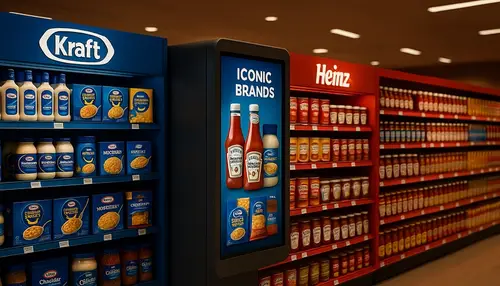
    In March 2015, Kraft Foods Group and H.J. Heinz Company announced a merger that would create the fifth-largest food and beverage company in the world. Orchestrated by Brazilian private equity firm 3G Capital and Warren Buffett’s Berkshire Hathaway, the $46 billion deal was designed to combine two iconic American brands into a global packaged foods powerhouse. The newly formed Kraft Heinz Company was expected to benefit from significant cost synergies, increased scale, and enhanced market presence in both developed and emerging markets.

    The merger structure reflected the ambitions of its backers. Heinz, which had been taken private by 3G Capital and Berkshire Hathaway in 2013 for $28 billion, would contribute its global reach and operational efficiencies, while Kraft brought a portfolio of household staples like Kraft Mac & Cheese, Oscar Mayer, and Planters. The combined entity retained the Kraft Heinz name, with headquarters in both Pittsburgh and Chicago.

    Under the terms of the deal, Kraft shareholders received a special cash dividend of $16.50 per share, funded by Berkshire Hathaway and 3G Capital, in addition to holding a 49% stake in the combined company. Heinz shareholders owned the remaining 51%. The merger was hailed as a strategic masterstroke, aligning with 3G Capital’s playbook of aggressive cost-cutting and operational discipline.

    Indeed, one of the merger’s primary rationales was the realization of cost synergies. Kraft Heinz projected $1.5 billion in annual savings by 2017 through streamlining operations, reducing overhead, and leveraging procurement efficiencies. These savings were central to the investment thesis, reflecting 3G Capital’s focus on zero-based budgeting, a rigorous cost-control method that had been successfully applied to previous acquisitions.

    However, while the initial financial gains were impressive, cracks soon began to appear in the merged company’s strategy. The aggressive cost-cutting measures, while boosting short-term margins, came at the expense of brand investment and innovation. In an era where consumer preferences were shifting towards healthier, fresher, and more artisanal products, Kraft Heinz’s reliance on legacy brands with limited innovation left it vulnerable to changing market dynamics.

    The challenges became evident in subsequent years. Despite achieving its synergy targets, Kraft Heinz struggled with declining organic sales, particularly in North America, its largest market. The company’s portfolio, heavily weighted towards processed foods, faced headwinds from evolving consumer trends favoring natural and organic alternatives. Furthermore, the rise of agile, digitally-savvy competitors eroded Kraft Heinz’s market share in key categories.

    In 2019, Kraft Heinz suffered a significant blow when it announced a $15.4 billion write-down on the value of its Kraft and Oscar Mayer brands. This impairment reflected not only market realities but also investor concerns about the sustainability of the company’s cost-cutting-driven growth model. The stock plummeted, and questions arose regarding the long-term viability of the merger’s strategic foundation.

    The difficulties faced by Kraft Heinz prompted a broader reassessment of its corporate strategy. Leadership acknowledged the need to pivot from pure cost-cutting towards revitalizing its brands and investing in innovation. This included efforts to modernize product offerings, expand into plant-based categories, and enhance digital marketing capabilities. Additionally, the company sought to streamline its portfolio by divesting underperforming assets and focusing on core growth areas.

    Despite these challenges, the merger’s impact on the packaged food industry was undeniable. The Kraft Heinz deal underscored the importance of scale in a consolidating market but also highlighted the limits of financial engineering absent a robust innovation pipeline. For 3G Capital and Berkshire Hathaway, the experience served as a sobering lesson in the complexities of consumer-driven industries, where cost discipline alone cannot drive sustainable growth.

    In retrospect, the Kraft Heinz merger exemplifies both the strengths and limitations of large-scale M&A strategies. While the deal succeeded in creating immediate shareholder value through cost synergies and scale, it underestimated the importance of adapting to rapidly changing consumer preferences. The company’s ongoing efforts to reposition itself underscore the need for a balanced approach that combines operational efficiency with brand relevance and market responsiveness.

    Today, Kraft Heinz remains a significant player in the global food industry, but its journey post-merger serves as a cautionary tale. The deal, once seen as a model of strategic consolidation, now illustrates the challenges of sustaining growth in a dynamic and increasingly fragmented marketplace.

    By 2023, 3G Capital had fully exited its Kraft Heinz stake. In 2025, Kraft Heinz announced plans to break itself into two companies, effectively unwinding the original combination and validating critics who had argued that the original merger thesis was structurally flawed.

    14 / 20

    The $68.7B Microsoft–Activision Deal: Antitrust Scrutiny and Industry Power Shift

    The $68.7B Microsoft–Activision Deal: Antitrust Scrutiny and Industry Power Shift

    Microsoft's $68.7B Activision Blizzard deal (2022-2023) navigated global antitrust battles to reshape gaming's future and expand Xbox's ecosystem.

    In October 2023, Microsoft completed its $68.7 billion acquisition of Activision Blizzard, marking the largest deal in the history of the video game industry. Announced in January 2022, the all-cash transaction was not only a strategic move to bolster Microsoft’s gaming portfolio but also a defining case in global antitrust regulation, sparking debates over market power, platform control, and the future of digital entertainment.

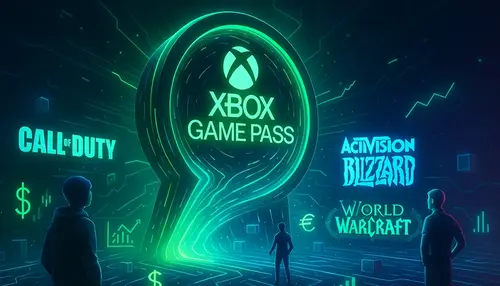
    The acquisition was positioned by Microsoft as a way to accelerate its ambitions in gaming and the metaverse. With Activision Blizzard’s rich portfolio (including franchises like Call of Duty, World of Warcraft, and Candy Crush) the deal aimed to significantly strengthen Microsoft’s content library, enhance its Xbox Game Pass subscription service, and improve its competitive position against rivals Sony and emerging cloud gaming platforms.

    Structurally, the transaction was straightforward: Microsoft agreed to pay $95 per share in cash, totaling $68.7 billion. The deal was expected to close within 12-18 months, but what followed was an extended battle with regulators across multiple jurisdictions. Key concerns centered around Microsoft’s potential dominance in cloud gaming, content exclusivity, and its ability to foreclose competitors from accessing critical game titles.

    The U.S. Federal Trade Commission (FTC) sued to block the deal in December 2022, arguing that the acquisition would give Microsoft the power to suppress competition by controlling popular game franchises. Meanwhile, the United Kingdom’s Competition and Markets Authority (CMA) initially blocked the merger in April 2023, citing concerns over Microsoft’s growing influence in the nascent cloud gaming market. The European Commission, however, approved the deal in May 2023 after Microsoft offered commitments to ensure broader access to Activision’s games across rival platforms and cloud services.

    To address regulatory concerns, Microsoft undertook a series of strategic concessions. The company signed 10-year agreements with Nintendo and various cloud gaming providers, ensuring that popular Activision titles, including Call of Duty, would remain accessible across multiple platforms. These agreements were designed to alleviate fears of anti-competitive practices and demonstrate Microsoft’s commitment to an open gaming ecosystem.

    The CMA’s opposition remained a critical hurdle until Microsoft restructured its proposed acquisition. In August 2023, Microsoft agreed to transfer cloud streaming rights for Activision Blizzard games outside the European Economic Area to Ubisoft, a third-party competitor. This innovative remedy addressed the CMA’s concerns and ultimately led to the regulator approving the deal in October 2023.

    The merger’s approval marked a significant regulatory milestone, not just for Microsoft but for the broader technology and gaming industries. It underscored the increasing scrutiny faced by Big Tech in global markets and the complex interplay of antitrust policies across jurisdictions. The prolonged investigation process also set precedents for how future large-scale digital mergers would be assessed, particularly in rapidly evolving sectors like gaming and cloud computing.

    Beyond regulatory challenges, the strategic implications of the acquisition were profound. For Microsoft, the deal significantly enhanced its Game Pass value proposition, adding a vast library of iconic franchises to its subscription model. It also bolstered Microsoft’s mobile gaming ambitions through Activision’s King division, known for hits like Candy Crush, positioning the company to compete more effectively in a segment traditionally dominated by Apple and Google.

    The acquisition also intensified competition with Sony, whose PlayStation platform has historically led in exclusive content. While Microsoft committed to maintaining cross-platform availability for key titles, the expanded content portfolio gave Xbox a stronger competitive edge in both console and cloud gaming markets.

    Financially, the deal was accretive to Microsoft’s earnings and aligned with its broader strategy of diversifying revenue streams beyond traditional software and cloud services. The gaming division, now significantly enlarged, became a more integral part of Microsoft’s long-term growth narrative, contributing to recurring revenues and expanding its consumer reach.

    In retrospect, the Microsoft–Activision Blizzard acquisition stands as a landmark event in the convergence of gaming, technology, and digital platforms. It highlighted the growing importance of content ownership in the battle for consumer engagement and the critical role of antitrust regulators in shaping the competitive landscape of the digital economy.

    The deal not only transformed Microsoft’s gaming ambitions but also set new standards for how large tech mergers will be scrutinized and structured in the years ahead. For the gaming industry, it marked a pivotal shift toward platform consolidation, subscription-based models, and the strategic importance of cloud and mobile ecosystems.

    15 / 20

    From Arcelor to ArcelorMittal: The Cross-Border Deal That Reshaped Global Steel

    From Arcelor to ArcelorMittal: The Cross-Border Deal That Reshaped Global Steel

    The 2006 Arcelor-Mittal Steel merger reshaped global steel through landmark cross-border consolidation, creating the industry's undisputed leader.

    In 2006, a seismic shift occurred in the global steel industry when Mittal Steel, then the world’s largest steel producer, completed a $33 billion takeover of European rival Arcelor. The deal created ArcelorMittal, a cross-border behemoth that instantly became the largest steelmaker in the world, producing over 100 million tons annually and controlling nearly 10% of global steel output.

    The merger was both strategic and symbolic. For Mittal Steel, led by Indian-born billionaire Lakshmi Mittal, it was the culmination of a decades-long growth journey driven by aggressive acquisitions in emerging and mature markets. For Arcelor, the product of a 2002 merger between Spain’s Aceralia, France’s Usinor, and Luxembourg’s Arbed, it was a reluctant union born of intense shareholder pressure and shifting industrial realities.

    Mittal launched its bid in January 2006, proposing to acquire Arcelor in a hostile all-stock offer. The proposal sparked fierce resistance from Arcelor’s board and several European political leaders, who viewed the deal as a threat to national and industrial interests. France and Luxembourg, in particular, were wary of ceding control of a strategic industry to a company perceived as foreign, even though Mittal Steel was legally based in the Netherlands.

    Arcelor attempted to fend off the bid by seeking alternative mergers, including a controversial plan to merge with Russia’s Severstal. But shareholders pushed back, favoring Mittal’s offer, which they saw as more financially compelling. Over a contentious six-month battle, Mittal raised its bid and made corporate governance concessions, ultimately winning over Arcelor’s board and investors.

    The final agreement, reached in June 2006, valued Arcelor at €26.9 billion ($33 billion), making it one of the largest cross-border industrial mergers ever at the time. The combined company was renamed ArcelorMittal and headquartered in Luxembourg, with Lakshmi Mittal as CEO and major shareholder.

    Strategically, the merger created a steelmaker with unparalleled scale, geographic reach, and product diversification. Arcelor brought strong positions in Europe and South America, while Mittal added assets across North America, Africa, and Asia. The combined entity could serve a broader set of customers in automotive, construction, energy, and packaging industries, while achieving significant cost synergies through supply chain integration and rationalization.

    Post-merger integration focused on consolidating operations, streamlining procurement, and reducing overhead, consistent with Mittal’s highly disciplined operational style. ArcelorMittal rapidly became a benchmark for global steelmaking efficiency and vertical integration, controlling mining assets alongside its production facilities.

    However, the merged company also faced significant headwinds. The 2008 financial crisis and subsequent global recession sharply reduced steel demand, pressuring margins and forcing ArcelorMittal to pursue debt reduction and restructuring initiatives. The company weathered these challenges through asset sales, cost discipline, and a continued focus on core operations.

    In the years that followed, ArcelorMittal further expanded through selective acquisitions, including Ilva in Italy and Essar Steel in India. It also invested in decarbonization technologies and low-emission steelmaking as global climate regulations tightened.

    Today, ArcelorMittal stands as a symbol of industrial consolidation done at scale. The deal that created it remains a landmark case of cross-border M&A: where strategic vision, shareholder alignment, and operational discipline reshaped a fragmented sector into a globally coordinated enterprise.

    16 / 20

    The DOJ Antitrust Playbook: Market Definition, Harm, and Remedies

    The DOJ Antitrust Playbook: Market Definition, Harm, and Remedies

    Inside the DOJ's merger review process where transactions face scrutiny based on market definition, competitive harm, and proposed remedy adequacy.

    When major mergers are announced, companies and investors often focus on valuation, synergies, and strategic fit. But in many cases, the most consequential part of the process unfolds behind closed doors, inside the U.S. Department of Justice (DOJ) Antitrust Division. There, regulators analyze whether a transaction is likely to harm competition, raise prices, or stifle innovation. The framework guiding this review centers on three core elements: market definition, competitive harm, and remedies.

    The first step in a DOJ review is defining the relevant market. This isn’t just a matter of naming competitors: it’s an economic exercise to understand which products and services consumers consider substitutes. The DOJ evaluates both product and geographic markets, often using the “hypothetical monopolist test” to ask: if a single firm controlled this market, could it raise prices profitably?

    This step is critical because the breadth or narrowness of the defined market shapes the perceived level of concentration. For instance, a merger between two cable companies might appear benign in a broad entertainment market, but highly problematic in the market for regional broadband service.

    Once the relevant market is defined, the DOJ assesses whether the merger is likely to substantially lessen competition. This includes evaluating whether the deal would eliminate a direct competitor, create a dominant firm, or discourage market entry by new players. The DOJ uses the Herfindahl-Hirschman Index (HHI), a measure of market concentration, as a key metric, though economic modeling, internal documents, and customer testimony also play major roles.

    Beyond price effects, the DOJ also considers non-price harms, such as reduced innovation, lower product quality, or diminished service levels. This has become increasingly relevant in digital markets and tech mergers, where services may be offered for free but competition drives innovation and privacy protections.

    If the DOJ finds potential harm, it examines whether those concerns can be addressed through remedies. Remedies fall into two categories: structural and behavioral. Structural remedies involve divesting overlapping business units or assets to preserve competition. These are preferred, as they create a lasting change to market structure. Behavioral remedies (such as commitments not to raise prices or to maintain interoperability) are harder to monitor and enforce, and thus viewed with more skepticism.

    When remedies are inadequate or not forthcoming, the DOJ can move to block the transaction. This occurred in the 2016 Halliburton-Baker Hughes deal and AT&T’s 2011 bid for T-Mobile USA. In other cases, like Bayer-Monsanto or CVS-Aetna, the DOJ approved the deal after negotiated divestitures.

    The DOJ review process can stretch for months and typically includes a “second request” for detailed information from the merging parties. It culminates in a decision to approve, approve with conditions, or sue to block the deal.

    In recent years, the DOJ has adopted a more assertive stance under both Democratic and Republican administrations, with increased scrutiny of vertical mergers and tech industry consolidation. New guidelines released in 2023 emphasize potential harms to innovation and labor markets, signaling a broader conception of competitive harm.

    Ultimately, the DOJ’s antitrust review serves as a gatekeeper: ensuring that mergers serve not just shareholder value, but the public interest in competitive, dynamic markets.

    17 / 20

    When M&A Is About Expansion: Entering New Markets Through Acquisition

    When M&A Is About Expansion: Entering New Markets Through Acquisition

    The strategic rationale behind market-extension mergers where companies acquire their way into new geographies and demographics rather than starting fresh.

    Mergers and acquisitions are often driven by synergies, product consolidation, or cost reduction. But for many companies, the most compelling rationale lies in market expansion. Through what are known as market-extension mergers, firms use M&A to enter new geographies or reach untapped customer segments, accelerating growth without building from the ground up.

    The concept is straightforward: instead of launching a product in a new region or demographic via organic investment, a company acquires an established player with local distribution, brand recognition, and customer relationships. This allows the buyer to bypass early-stage costs, regulatory hurdles, and time-to-market delays.

    One of the clearest examples came in 2010, when Walmart acquired a controlling stake in South Africa’s Massmart for $2.4 billion. Rather than build a retail footprint from scratch, Walmart gained instant access to sub-Saharan markets through Massmart’s established stores and logistics network. Although the integration was complex, the deal illustrated how geographic entry could be accelerated through acquisition.

    Similarly, Unilever has long used M&A to expand its footprint in emerging markets. Acquisitions such as Dollar Shave Club in the U.S. or Horlicks in India allowed Unilever to reach specific consumer segments and regional markets where building brand trust organically would have taken years.

    In the tech sector, Facebook’s acquisition of WhatsApp was partially about user geography. At the time of the $19 billion deal in 2014, WhatsApp had dominant positions in markets like India, Brazil, and large parts of Europe, regions where Facebook Messenger had yet to gain similar traction. Rather than launch new messaging products in these areas, Facebook effectively bought access to a massive user base.

    Market-extension M&A isn’t limited to geography. It can also target demographics. For example, Procter & Gamble’s acquisition of First Aid Beauty in 2018 was a move to connect with younger, skincare-savvy consumers focused on clean beauty. The brand filled a gap in P&G’s portfolio without requiring the company to re-engineer its product development or marketing strategy.

    Executing such deals requires rigorous due diligence, not just on financials, but on cultural fit, brand perception, and operational compatibility. Regulatory and geopolitical risk also comes into play, especially for cross-border transactions. Consumer preferences, labor laws, and retail dynamics can vary significantly across markets, and successful integration depends on adapting to, not overriding, these local realities.

    The logic of market-extension mergers often emphasizes speed and certainty over internal innovation. In industries where first-mover advantage or brand loyalty is critical, acquiring a local incumbent can be the fastest route to relevance. This is especially true in sectors like food and beverage, healthcare, consumer tech, and financial services, where localization is essential to market success.

    That said, not all market-entry deals succeed. Cultural mismatch, brand dilution, or misaligned expectations can undermine value. Companies must balance their desire for scale with a respect for local expertise and customer loyalty. Deals must be structured not just for control, but for collaboration.

    In retrospect, market-extension M&A reflects a pragmatic view of corporate growth. It recognizes that while innovation is essential, acquisition can offer the fastest path to new markets, if executed with strategic clarity and operational humility.

    Today, as growth slows in saturated home markets, market-extension mergers continue to offer a tested path to global scale and demographic diversification.

    18 / 20

    When M&A Follows the Cycle: How Dealmaking Mirrors Economic Booms and Busts

    When M&A Follows the Cycle: How Dealmaking Mirrors Economic Booms and Busts

    Inside the recurring waves of M&A activity, and how economic cycles, interest rate policy, and regulatory shifts influence when, how, and why deals get done.

    Mergers and acquisitions don’t occur in a vacuum. Over the last century, M&A activity has come in waves, each shaped by economic expansion, monetary conditions, regulatory climates, and shifting strategic imperatives. From the trust-busting days of the early 1900s to the debt-fueled megadeals of the 1980s and the SPAC surge of the 2020s, deal cycles have consistently mirrored broader macroeconomic forces.

    Economists and historians typically identify six major M&A waves in U.S. corporate history, beginning with the consolidation of monopolies during the late 19th century’s industrial boom. The first wave (1897–1904) was marked by horizontal mergers in railroads, oil, and steel, enabled by lax regulation and the rise of large-scale manufacturing.

    Later waves reflected economic optimism and rising equity markets. The third wave (1965–1969) was defined by conglomerate mergers, as firms pursued diversification strategies under the assumption that size alone conferred resilience. The fourth wave (1981–1989), perhaps the most iconic, was driven by leveraged buyouts, deregulation, and financial engineering, fueled by high-yield debt and activist pressure.

    The common thread? Liquidity and risk appetite. And at the center of both is the role of the Federal Reserve.

    Low interest rates reduce the cost of capital, enabling buyers to finance acquisitions more easily. When the Fed maintains accommodative policy (as it did following the dot-com bust, the 2008 crisis, and during the COVID-19 pandemic), M&A tends to accelerate. Conversely, rising rates tighten financing conditions and increase required returns on investment, slowing deal momentum.

    The Fed’s role in shaping liquidity and credit spreads directly influences private equity behavior, strategic acquirer appetite, and valuation multiples. The 2000s fifth wave, defined by global consolidation and mega-deals like HP–Compaq and Pfizer–Wyeth, unfolded in an era of low inflation and expanding balance sheets. When the Fed hiked rates in the mid-2000s, activity cooled, until QE reignited the sixth wave after 2008.

    The post-2010 period saw record-low interest rates, favorable debt markets, and a deregulatory tilt in the U.S., creating ideal M&A conditions. This culminated in the record-breaking year of 2021, when over $5 trillion in deals were announced globally. But as inflation surged and the Fed began raising rates in 2022, deal volume declined sharply.

    In parallel, regulatory shifts have consistently defined wave peaks and troughs. The rise of antitrust scrutiny in the 1970s curtailed conglomerate deals. Similarly, the Biden administration’s 2021 executive order on competition signaled more aggressive antitrust enforcement, slowing large horizontal mergers across healthcare, tech, and telecom.

    What also drives cycles is confidence. CEOs are more likely to pursue bold deals when equity markets are rising and when economic forecasts are stable. Volatility, uncertainty, and political risk tend to delay strategic decisions or derail ongoing talks.

    In sum, M&A activity is highly cyclical, not only reacting to macroeconomic conditions, but amplifying them. When rates are low, markets are rising, and regulators are permissive, dealmaking accelerates. When credit tightens and oversight increases, it slows.

    For boards and bankers alike, understanding these cycles (and the Fed’s influence on liquidity and valuations) is critical. Timing matters. And history shows that the best deals aren’t always done in booms, but in the transitions between cycles, when clarity meets opportunity.

    19 / 20

    When M&A Means Breaking Up: The Rise of Spin-Offs and Carve-Outs

    When M&A Means Breaking Up: The Rise of Spin-Offs and Carve-Outs

    Inside the growing use of spin-offs, carve-outs, and Reverse Morris Trusts, where strategic breakups (not mergers) unlock value and optimize tax outcomes.

    In the world of M&A, deals are often defined by scale and combination. But sometimes, value creation lies not in putting companies together, but in pulling them apart. Spin-offs, split-offs, and carve-outs have become powerful tools for strategic realignment, operational focus, and investor returns. Alongside them, complex deal structures like the Reverse Morris Trust have emerged as sophisticated ways to achieve breakups tax-efficiently.

    A spin-off occurs when a parent company distributes shares of a subsidiary to its shareholders, creating a new, publicly traded entity. Unlike a sale, spin-offs are typically tax-free and allow investors to own shares in both the original and new company. They’ve been used to sharpen strategic focus: separating high-growth or high-margin businesses from legacy or capital-intensive divisions.

    Famous examples include eBay’s 2015 spin-off of PayPal, which allowed the fast-growing digital payments business to pursue a different capital strategy from the slower-moving marketplace. Similarly, Johnson & Johnson announced in 2021 it would spin off its consumer health division into a standalone company, enabling each segment to prioritize distinct product and innovation roadmaps.

    Split-offs take the concept further. In a split-off, shareholders are offered the option to exchange their shares in the parent company for shares in a subsidiary, effectively choosing one entity over the other. This structure allows for cleaner investor segmentation and often reduces outstanding shares of the parent, enhancing financial ratios.

    Carve-outs, by contrast, involve the parent selling a minority stake in a subsidiary through an IPO, generating proceeds while retaining control. This is often a prelude to a full spin-off and allows the market to establish a valuation benchmark. General Motors used this approach with its 2022 carve-out of Cruise, its autonomous vehicle unit, while maintaining strategic oversight.

    The most complex of these strategies is the Reverse Morris Trust (RMT), a structure designed to combine a spin-off with a subsequent merger, without triggering corporate-level tax. In an RMT, a parent spins off a subsidiary, which then merges with a third party. To preserve tax-free treatment, the parent’s shareholders must retain control of the combined entity.

    RMTs are favored in highly regulated or capital-intensive sectors. Notable examples include Verizon’s 2016 sale of its data centers to Equinix via RMT, and Lockheed Martin’s $4.6 billion acquisition of Leidos’s IT services in a defense-focused RMT. These deals offer the benefits of both a divestiture and a strategic merger, while sidestepping tax liabilities that might otherwise reach billions.

    The rise of these structures reflects a broader shift in corporate strategy. In an environment where investors prioritize focus, agility, and returns over sheer size, breakups often outperform combinations. Activist shareholders frequently push for spin-offs to unlock “conglomerate discounts” embedded in diversified businesses.

    Executing these deals requires careful legal, tax, and regulatory planning. Boards must evaluate strategic logic, investor appetite, and potential execution risks. Timing is also crucial: markets must be receptive, and the standalone unit must be operationally ready.

    In retrospect, the evolution of spin-offs, carve-outs, and Reverse Morris Trusts illustrates that M&A is not always about building empires. Sometimes, it’s about releasing trapped value, clarifying strategy, and reshaping portfolios with surgical precision.

    Today, strategic separation is as much a part of modern M&A as blockbuster mergers: demonstrating that breaking up can, in fact, be the smartest deal of all.

    20 / 20

    When Pharma Merged Again and Again: Megadeals That Reshaped the Industry

    When Pharma Merged Again and Again: Megadeals That Reshaped the Industry

    Waves of consolidation transformed global pharmaceuticals as companies pursued scale, pipeline strength, and cost efficiency through strategic megamergers.

    From the 1990s to the 2020s, the pharmaceutical industry underwent repeated waves of consolidation, driven by the need for scale, pipeline replenishment, and cost control. These megamergers not only changed the competitive landscape but also redefined how innovation, R&D, and market power were managed in one of the world’s most complex and regulated sectors.

    The first major wave of pharma megamergers took place in the 1990s. Faced with looming patent expirations and rising R&D costs, companies looked to mergers as a way to rationalize operations and gain access to broader therapeutic portfolios. In 1995, Glaxo and Wellcome merged to form Glaxo Wellcome, creating a global leader in respiratory and antiviral drugs. This was followed by SmithKline Beecham’s 2000 merger with Glaxo Wellcome, forming GlaxoSmithKline in a $76 billion deal.

    Across the Atlantic, U.S. giants followed suit. In 2000, Pfizer acquired Warner-Lambert for $89 billion, securing full rights to Lipitor, which became the world’s top-selling drug. Three years later, Pfizer acquired Pharmacia for $60 billion, expanding its product range and reinforcing its position as the largest drugmaker globally.

    Other major deals included Merck’s $41 billion acquisition of Schering-Plough in 2009 and Roche’s full acquisition of Genentech for $46.8 billion the same year. While Pfizer continued its M&A push with the $68 billion acquisition of Wyeth in 2009, others like Novartis and Sanofi pursued smaller bolt-ons to build leadership in vaccines, generics, and specialty medicine.

    The 2010s saw a more strategic and targeted wave of megamergers. Companies began focusing less on scale alone and more on acquiring late-stage pipelines and biologic capabilities. Bristol Myers Squibb’s $74 billion acquisition of Celgene in 2019 exemplified this trend, giving BMS access to blockbuster oncology drugs like Revlimid while enhancing its pipeline in immunotherapy.

    Meanwhile, AbbVie’s $63 billion acquisition of Allergan in 2020 combined a strong immunology franchise with a cash-generating aesthetic medicine business. That same year, AstraZeneca acquired Alexion Pharmaceuticals for $39 billion, expanding into rare diseases and bolstering its presence in immunology.

    Underlying these deals was the constant pressure of the “patent cliff” (the expiry of exclusivity for blockbuster drugs) and the high failure rate of internal R&D. M&A became a preferred strategy for acquiring de-risked assets, shortening development timelines, and smoothing revenue trajectories.

    Tax considerations also played a role. Several deals, such as Pfizer’s attempted $118 billion acquisition of AstraZeneca in 2014, included motivations around tax inversion, although regulatory pushback ultimately curtailed many such efforts.

    By the 2020s, the megamerger logic remained intact, but scrutiny grew. Regulators in the U.S. and Europe increasingly questioned whether consolidation reduced innovation or limited competition, especially in specialized markets like oncology and rare diseases.

    Despite this, deals continued. In 2023, Pfizer announced its $43 billion acquisition of Seagen, a leader in antibody-drug conjugates, reinforcing the pattern of acquiring specialized biotech firms to refresh pipelines and sustain growth.

    In retrospect, pharma megamergers have been both a symptom and a strategy: a response to industry challenges and a tool to manage them. Over three decades, they’ve reshaped the global drug industry into a few dominant players, each built not just on science, but on dealmaking.

    Frequently Asked Questions

    Explore More

    Ready to Transform Your Interview Prep?

    Join 3,000+ students preparing smarter

    Join 3,000+ students who have downloaded this resource