


Failed Deal Chronicles: How Regulators Killed the Biggest Mergers

    Failed Deal Chronicles: How Regulators Killed the Biggest Mergers

    27 min read
    10 stories
    Featuring:BroadcomQualcommHock TanAdobeFigmaDylan FieldNvidiaArm HoldingsJensen HuangSoftBankAT&TT-MobileDeutsche TelekomGEHoneywellJack WelchPfizerAstraZenecaPascal SoriotSiemensAlstomMargrethe VestagerHalliburtonBaker HughesComcastTime Warner CableBrian RobertsBHP BillitonRio TintoCFIUSEuropean CommissionU.S. Department of JusticeFTCUK CMAFCCReverse termination feeBreakup feeAntitrust reviewTax inversion5G national security

    Introduction

    On December 18, 2023, Adobe wrote a $1 billion check to Figma, a design software startup it had agreed to buy fifteen months earlier for $20 billion. Adobe never owned a single Figma share. The $1 billion was a reverse termination fee, the penalty clause for walking away when regulators in the UK (CMA) and EU (European Commission) signaled they would block the deal. It was nearly triple the total capital Figma had raised across its entire venture history. In July 2025, Figma IPO'd as an independent company, and Adobe's stock spent 2024 and 2025 underperforming as investors priced in the lost strategic asset.

    The ten stories in this collection are all deals like that. Transactions that were announced, celebrated, structured, signed, and then killed by regulators before they could close. The list spans twenty-five years of cross-border M&A: AT&T's $39 billion T-Mobile bid blocked by the DOJ in 2011 (and the $4 billion breakup fee that funded T-Mobile's "Un-carrier" reinvention), GE's $42 billion Honeywell merger cleared by U.S. regulators and then vetoed by the European Commission in 2001 in the first-ever EU block of a US-US merger, Pfizer's $118 billion hostile bid for AstraZeneca derailed in 2014 by UK political pressure over tax inversion, Halliburton's $35 billion Baker Hughes deal collapsing in 2016 with a $3.5 billion reverse fee, Siemens-Alstom rejected by Brussels in 2019 despite French and German political backing, Comcast abandoning its $45 billion Time Warner Cable tie-up under FCC pressure, BHP and Rio Tinto giving up on their $116 billion iron ore joint venture after pushback from Chinese steel buyers, and the defining geopolitical deal of the modern era: Broadcom-Qualcomm, blocked by presidential executive order in 2018 over 5G and national security.

    A deal can die for many reasons. Most of these deals died for one of five: horizontal overlap (DOJ v. AT&T-T-Mobile, DOJ v. Halliburton-Baker Hughes, FTC/CMA v. Adobe-Figma), conglomerate or portfolio effects (EU v. GE-Honeywell, EU v. Siemens-Alstom), vertical foreclosure (FTC/CMA/EU v. Nvidia-Arm), national security review (CFIUS/executive order v. Broadcom-Qualcomm), or political and shareholder revolt that stops a deal before regulators even rule (Pfizer-AstraZeneca, BHP-Rio Tinto). For bankers, these cases are interview gold: they are exactly where you go when asked "walk me through a deal that fell apart and explain why."

    For the mechanics of how reverse termination fees get sized and negotiated, the break-up fee and termination fee guide explains the math behind the $1B Adobe-Figma, $3.5B Halliburton-Baker Hughes, and $4B AT&T-T-Mobile numbers.

    Reverse termination fee

    A fee paid by the acquirer to the target when a signed deal fails to close because of conditions outside the target's control, most commonly a regulatory block (antitrust, foreign investment, national security) or financing failure. Unlike a standard breakup fee (paid by the target for walking away to take a higher bid), the reverse termination fee allocates regulatory risk to the buyer. Typical sizing is 4 to 7% of deal value, but antitrust-specific reverse fees can run higher (Adobe paid $1B, or 5%, to Figma; Halliburton paid $3.5B, or 10%, to Baker Hughes; AT&T paid roughly $4B to Deutsche Telekom including spectrum). The fee is the single most-negotiated number in any deal with meaningful regulatory risk.

    01 / 10

    The $117B Broadcom–Qualcomm Deal: Corporate Strategy Meets U.S. Geopolitics

    The $117B Broadcom–Qualcomm Deal: Corporate Strategy Meets U.S. Geopolitics

    Broadcom's $117B hostile Qualcomm bid in 2018 was blocked by U.S. officials over national security concerns related to 5G technology and global competition.

    In March 2018, the U.S. government took the extraordinary step of blocking Broadcom’s $117 billion hostile bid to acquire Qualcomm, marking a rare instance where national security concerns overruled corporate strategy in the technology sector. The intervention, executed via a presidential order, underscored the growing intersection of geopolitics and high-tech industry consolidation.

    Broadcom, a Singapore-based semiconductor giant, had launched its bid in November 2017, offering $70 per Qualcomm share in a combination of cash and stock. The bid, later revised upwards, represented a 24% premium over Qualcomm’s market value and would have been the largest technology acquisition in history. Broadcom’s CEO, Hock Tan, framed the deal as a strategic consolidation to create a global leader in semiconductor innovation, capable of competing with the likes of Intel and Samsung.

    Qualcomm, however, resisted the overture, viewing Broadcom’s bid as opportunistic and undervaluing its long-term growth prospects, particularly in the emerging 5G wireless market. Qualcomm’s board cited concerns over Broadcom’s cost-cutting playbook, fearing it would undermine Qualcomm’s R&D-driven leadership in wireless technology standards.

    While corporate battles over valuation and strategy were expected, the deal took a geopolitical turn when the Committee on Foreign Investment in the United States (CFIUS) intervened. CFIUS, an interagency panel tasked with reviewing foreign investments for national security risks, launched an investigation, citing concerns that Broadcom’s acquisition could weaken Qualcomm’s position in 5G development and give Chinese rivals, notably Huawei, an edge in global telecom infrastructure.

    The U.S. Department of Treasury, in a rare public letter, emphasized that Qualcomm’s leadership in 5G was a matter of national security, arguing that reduced U.S. influence in setting global wireless standards could have broad implications for economic competitiveness and defense capabilities.

    On March 12, 2018, President Donald Trump issued an executive order blocking the proposed acquisition, citing credible evidence that Broadcom’s control of Qualcomm might “impair the national security of the United States.” The order was sweeping, prohibiting the merger outright and effectively ending Broadcom’s pursuit.

    In response, Broadcom announced it would abandon its bid and relocate its headquarters from Singapore to the U.S., a move it had already planned to mitigate foreign ownership concerns. However, the damage was done and the Qualcomm acquisition was off the table.

    The blocked deal had broader implications for global M&A, signaling increased U.S. scrutiny of foreign investments in strategic technology sectors. It also marked a turning point in the tech cold war between the U.S. and China, with Washington taking a more proactive stance in safeguarding critical industries.

    From a corporate perspective, the failed acquisition reinforced Qualcomm’s independence and allowed it to continue its 5G leadership. Ironically, in subsequent years, Qualcomm’s stock surged as the company capitalized on the global 5G rollout and rebounded from earlier headwinds, including regulatory fines and licensing disputes.

    In retrospect, Broadcom’s failed bid for Qualcomm serves as a landmark case where national security considerations overruled traditional market dynamics. It highlighted how critical technologies like semiconductors and 5G are now viewed through a geopolitical lens, reshaping the landscape for large-scale tech mergers.

    Today, the Broadcom-Qualcomm saga remains a defining example of how corporate strategy, national security, and global tech competition can collide, with lasting impacts on industry consolidation and foreign investment policy.


    02 / 10

    When Adobe’s $20B Figma Deal Was Blocked by Global Antitrust Regulators

    When Adobe’s $20B Figma Deal Was Blocked by Global Antitrust Regulators

    Inside the 2022-2023 deal where Adobe’s $20B bid for Figma was blocked by regulators over competition concerns in design software and cloud collaboration.

    In September 2022, Adobe announced its plan to acquire Figma, a rapidly growing web-based design platform, for $20 billion in cash and stock. The deal was the largest in Adobe’s history and aimed to integrate Figma’s collaborative design tools with Adobe’s creative software ecosystem, enhancing Adobe’s presence in cloud-based design workflows.

    Figma, founded in 2012 by Dylan Field and Evan Wallace, had revolutionized product design with its browser-first, collaborative platform. It allowed teams to design, prototype, and iterate in real-time, directly challenging legacy desktop applications like Adobe XD. Figma’s popularity among designers and developers had grown exponentially, making it a rising competitive threat to Adobe’s creative suite dominance.

    Adobe’s strategic rationale for the acquisition was clear: rather than cede market share to Figma’s disruptive model, Adobe sought to bring Figma into its fold, combining Figma’s collaboration strengths with Adobe’s robust creative tools. The merger was positioned as an opportunity to accelerate web-based innovation and expand Adobe’s reach among younger, tech-savvy users.

    However, from the outset, the proposed deal drew the attention of global antitrust regulators. Authorities in the United States, United Kingdom, and European Union raised concerns that Adobe’s acquisition of its most direct competitor in screen design software would reduce competition, stifle innovation, and harm consumers.

    The UK’s Competition and Markets Authority (CMA) launched a Phase 2 investigation, citing evidence that Adobe’s internal documents showed intentions to “neutralize” Figma’s competitive threat. The CMA also noted that Adobe had scaled back development of Adobe XD, further intensifying competition concerns. In parallel, the European Commission initiated its own in-depth probe, focusing on potential anti-competitive effects in design software and collaborative tools markets.

    Adobe and Figma made extensive efforts to address regulatory concerns, including proposing behavioral remedies and commitments around pricing and interoperability. However, regulators remained unconvinced, arguing that the merger would eliminate a key competitor and reduce future market innovation.

    By December 2023, with no viable path to approval, Adobe and Figma mutually agreed to terminate the merger agreement. As stipulated in the deal terms, Adobe paid Figma a $1 billion reverse termination fee. Both companies emphasized their respect for the regulatory process, while expressing disappointment in the outcome.

    The deal’s collapse marked a watershed moment for tech M&A, signaling a new era of heightened antitrust scrutiny, particularly for transactions involving potential competitors. Regulators framed the decision as a victory for market competition, preventing the absorption of an innovative challenger by an established incumbent.

    For Adobe, the failed acquisition prompted a renewed focus on strengthening its own collaborative offerings and expanding Adobe Creative Cloud’s functionality, but the strategic cost has been significant: Adobe’s stock underperformed the broader software index through 2024 and 2025 as investors priced in the lost Figma asset. Figma, meanwhile, capitalized on its brand momentum and went public in its own right in July 2025, one of the year’s most watched tech listings.

    In retrospect, the Adobe–Figma saga exemplifies the increasing complexity of large tech mergers in an environment where regulatory bodies are more proactive in preserving market competition. The case also highlights how competition concerns now extend beyond price impacts to include innovation dynamics and the potential chilling effect of eliminating disruptive startups.

    Today, Adobe’s attempted acquisition of Figma stands as a defining example of how antitrust considerations are reshaping the boundaries of permissible consolidation in the digital economy.

    03 / 10

    The $40B Nvidia–Arm Merger: How Antitrust Concerns Sank a Semiconductor Mega-Deal

    The $40B Nvidia–Arm Merger: How Antitrust Concerns Sank a Semiconductor Mega-Deal

    Nvidia's $40B Arm acquisition attempt (2020-2022) was blocked by antitrust regulators across US, UK, EU, and China over competition and innovation concerns.

    In September 2020, Nvidia announced its intent to acquire Arm Holdings from Japan’s SoftBank Group for $40 billion, marking what would have been the largest deal in semiconductor industry history. The all-stock and cash transaction was positioned as a strategic move to combine Nvidia’s GPU leadership with Arm’s dominance in mobile and embedded processor architectures.

    Arm, based in Cambridge, UK, is renowned for its energy-efficient chip designs that power over 95% of smartphones worldwide, as well as an expanding presence in IoT, automotive, and data center markets. Unlike Nvidia’s vertical integration model, Arm operated as a neutral supplier, licensing its architecture to hundreds of companies, including Nvidia’s competitors such as Apple, Qualcomm, and Samsung.

    Nvidia’s CEO Jensen Huang pitched the acquisition as a chance to accelerate innovation in AI, cloud computing, and edge devices by merging Arm’s vast ecosystem with Nvidia’s advanced computing capabilities. The deal was also framed as a way to enhance Arm’s R&D resources under Nvidia’s ownership while preserving its open licensing model.

    However, the proposed acquisition quickly drew intense scrutiny from regulators across key global markets. In the United States, the Federal Trade Commission (FTC) filed a lawsuit to block the deal in December 2021, arguing that it would give Nvidia undue control over critical semiconductor technology and stifle competition across multiple markets.

    In the United Kingdom, the Competition and Markets Authority (CMA) launched a Phase 2 investigation, citing concerns that Nvidia’s ownership of Arm could reduce innovation and limit access for Arm’s licensees. National security considerations were also raised, given Arm’s strategic importance to the UK’s tech ecosystem.

    The European Commission initiated its own in-depth probe, focusing on the potential foreclosure of Nvidia’s rivals through restricted access to Arm’s IP. Meanwhile, Chinese regulators were reportedly slow-walking the review, reflecting broader geopolitical tensions and concerns over the implications for China’s domestic semiconductor ambitions.

    Despite Nvidia’s assurances of maintaining Arm’s open licensing model and offering legally binding commitments, regulators remained skeptical. The sheer breadth of Arm’s customer base and its foundational role in global semiconductor supply chains made the deal uniquely sensitive.

    By February 2022, after months of regulatory deadlock, Nvidia and SoftBank announced the termination of the acquisition agreement. SoftBank received a $1.25 billion break-up fee from Nvidia and shifted its strategy toward preparing Arm for an initial public offering.

    The collapse of the Nvidia–Arm deal was widely seen as a victory for antitrust authorities, marking a significant pushback against Big Tech’s vertical consolidation strategies. It also signaled a shift in regulatory focus toward preserving open ecosystems and safeguarding innovation in foundational technologies.

    For Nvidia, the failed acquisition turned out to be a blessing in disguise. The company continued its growth trajectory in AI, data centers, and high-performance computing, and by 2024 had become the world’s most valuable company by market capitalization. SoftBank took Arm public on Nasdaq in September 2023 at a $54.5 billion valuation, more than 35% above Nvidia’s abandoned $40 billion offer, and Arm’s stock nearly doubled in its first year of trading as AI demand reshaped chip design economics.

    In retrospect, Nvidia’s attempted acquisition of Arm stands as a landmark case in global antitrust enforcement, illustrating how strategic assets in critical industries face heightened scrutiny in an era of technological competition and geopolitical sensitivities.

    Today, the Nvidia–Arm saga remains a pivotal example of how regulatory intervention can shape the dynamics of industry-defining mega-deals.

    04 / 10

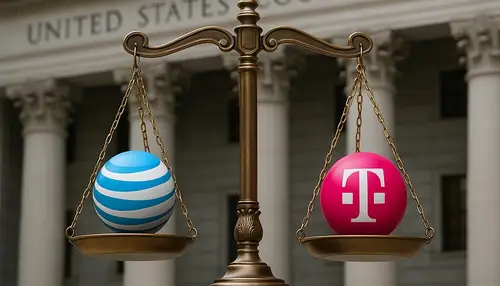
    When AT&T’s $39B T-Mobile Bid Was Blocked by the DOJ Over Competition Concerns

    When AT&T’s $39B T-Mobile Bid Was Blocked by the DOJ Over Competition Concerns

    AT&T's $39B T-Mobile USA merger attempt (2011) was blocked by the U.S. Department of Justice, citing wireless industry competition concerns.

    In March 2011, AT&T announced its intent to acquire T-Mobile USA from Deutsche Telekom for $39 billion, in a deal that would have consolidated the second- and fourth-largest wireless carriers in the United States. The proposed acquisition was framed by AT&T as a strategic move to expand its spectrum capacity, improve network quality, and accelerate its 4G LTE deployment.

    AT&T’s offer was structured as a cash-and-stock transaction, with $25 billion in cash and the remainder in AT&T stock. The combined entity would have surpassed Verizon Wireless in total subscribers, creating a dominant player in the U.S. wireless market with over 130 million customers.

    However, from the outset, the deal faced fierce opposition from consumer advocates, competitors, and regulators. Critics argued that eliminating T-Mobile, a price-disruptive competitor known for aggressive promotions, would significantly reduce competition in the wireless market, leading to higher prices and diminished consumer choice.

    On August 31, 2011, the U.S. Department of Justice (DOJ) filed an antitrust lawsuit to block the merger, asserting that the deal would “substantially lessen competition” in violation of the Clayton Act. The DOJ highlighted that T-Mobile had played a pivotal role in driving innovation and competitive pricing in the wireless industry, often forcing larger rivals to follow suit with consumer-friendly policies.

    The DOJ’s complaint emphasized that reducing the number of national wireless carriers from four to three would harm consumers, particularly in rural and urban markets where competition was already limited. The Federal Communications Commission (FCC) also expressed concerns, launching its own review and signaling potential regulatory roadblocks.

    Despite AT&T’s attempts to argue the merger’s benefits, including job creation and improved service quality, public opinion and political opposition grew stronger. Competitors like Sprint publicly opposed the deal, warning of a duopoly dominated by AT&T and Verizon.

    As regulatory resistance intensified, AT&T explored divestiture proposals and network-sharing agreements to appease antitrust concerns. However, these remedies failed to address the fundamental issue of market concentration.

    By December 2011, with no clear path forward, AT&T and Deutsche Telekom mutually agreed to terminate the merger agreement. As part of the breakup, AT&T paid Deutsche Telekom a $4 billion termination fee, including $3 billion in cash and additional spectrum rights.

    The collapse of the AT&T-T-Mobile deal had significant industry implications. T-Mobile, initially seen as a vulnerable fourth-place carrier, used the failed merger as a springboard for reinvention. Under CEO John Legere, T-Mobile launched its “Un-carrier” strategy, aggressively competing on pricing, unlimited data, and contract-free plans, which revitalized its market position and forced rivals to respond. In 2020, T-Mobile completed its own $26 billion merger with Sprint, vaulting it to second place in U.S. wireless by subscribers and permanently reshaping the market the DOJ had moved to protect just nine years earlier.

    For AT&T, the failed acquisition underscored the risks of aggressive consolidation in a politically and regulatorily sensitive industry. The company refocused its strategy on organic network investments and smaller acquisitions, such as the purchase of Leap Wireless in 2013.

    In retrospect, the blocked merger became a landmark case in U.S. antitrust enforcement, demonstrating regulators’ willingness to challenge large-scale consolidation in sectors critical to consumer welfare. It also illustrated the importance of maintaining competitive dynamics in rapidly evolving industries like telecommunications.

    Today, the AT&T-T-Mobile saga stands as a defining example of how antitrust scrutiny can shape market structure and foster competition, ultimately benefiting consumers.

    05 / 10

    When GE’s $42B Honeywell Merger Was Blocked by EU Antitrust Regulators

    When GE’s $42B Honeywell Merger Was Blocked by EU Antitrust Regulators

    GE's $42B Honeywell bid (2001) exposed transatlantic regulatory divide: approved in the U.S. but blocked by the EU over different antitrust approaches.

    In October 2000, General Electric (GE) announced its intention to acquire Honeywell International for approximately $42 billion, in a deal that would combine two American industrial giants with significant overlapping interests in aerospace and industrial products. The proposed merger, structured as a stock transaction, was heralded by GE CEO Jack Welch as a strategic move to expand GE’s leadership in aviation and manufacturing technologies.

    From a U.S. regulatory perspective, the deal seemed poised for approval. The U.S. Department of Justice (DOJ) concluded its antitrust review in May 2001, clearing the merger after GE agreed to divest certain business units, such as Honeywell’s military helicopter engines. The DOJ viewed these remedies as sufficient to preserve competition.

    However, across the Atlantic, the European Commission (EC) took a much harsher stance. Under Competition Commissioner Mario Monti, the EC launched a thorough investigation, raising serious concerns about the merger’s impact on competition in aerospace markets, particularly in jet engines, avionics, and maintenance services.

    The EC’s primary objection was the “portfolio effect,” a concept less emphasized in U.S. antitrust enforcement at the time. Regulators argued that combining GE’s dominance in aircraft engines (via GE Aviation) with Honeywell’s leading position in avionics and auxiliary power units would create a vertically integrated powerhouse capable of bundling products and excluding competitors, such as Rolls-Royce and United Technologies (Pratt & Whitney).

    European officials feared that GE’s financial clout, reinforced by its GE Capital unit, would enable anti-competitive practices, including tying and bundling strategies that would disadvantage rivals and distort fair competition in global aerospace markets.

    Despite GE’s offers of remedies, including additional divestitures and behavioral commitments, the EC remained unconvinced. On July 3, 2001, the European Commission formally prohibited the merger, marking the first time it had vetoed a merger between two U.S. companies that had already received U.S. regulatory approval.

    The decision sparked a transatlantic rift over antitrust policy. U.S. officials and business leaders criticized the EC for what they saw as overreach and protectionism. Jack Welch, who had planned to retire after completing the Honeywell deal, publicly expressed his frustration, calling the EU’s intervention “inexplicable.”

    From the EU’s perspective, the veto underscored its commitment to enforcing competition laws within its jurisdiction, irrespective of decisions made by U.S. regulators. The case highlighted fundamental differences in antitrust philosophy: while the U.S. focused on consumer prices and direct market overlaps, the EU placed greater emphasis on future competitive dynamics and conglomerate effects.

    The failure of the GE-Honeywell merger had significant ramifications. For GE, it was a rare defeat in Jack Welch’s otherwise successful tenure. For Honeywell, the deal’s collapse led to a period of strategic realignment under new leadership.

    In the broader context of global M&A, the case established the European Commission as a critical regulator capable of influencing the outcome of cross-border mergers, even those between non-European companies. It also prompted multinationals to take a more cautious and globally coordinated approach to antitrust compliance.

    Today, the GE-Honeywell saga remains a landmark case in international competition law, exemplifying how divergent regulatory philosophies can shape the fate of high-profile corporate transactions.

    06 / 10

    When Pfizer’s $118B AstraZeneca Bid Failed Over Strategy and Tax Inversion Risks

    When Pfizer’s $118B AstraZeneca Bid Failed Over Strategy and Tax Inversion Risks

    Pfizer's $118B AstraZeneca bid (2014) failed amid concerns over tax inversion motives, R&D priorities, and British national interest considerations.

    In early 2014, Pfizer launched an ambitious bid to acquire UK-based AstraZeneca for $118 billion, aiming to create the world’s largest pharmaceutical company by revenue. The proposed merger, announced in April 2014, was a combination of cash and stock, valuing AstraZeneca shares at a significant premium and marking one of the largest attempted deals in pharma history.

    For Pfizer, the deal was strategically driven by multiple factors. Firstly, the company sought to bolster its drug pipeline, particularly in oncology and immunology, areas where AstraZeneca had promising assets. Secondly, Pfizer aimed to enhance operational efficiencies through scale, projecting substantial cost synergies from the combination.

    However, a crucial motivator was financial: tax inversion. At the time, U.S.-based corporations faced one of the highest corporate tax rates globally. By acquiring AstraZeneca and re-domiciling its headquarters to the UK, Pfizer aimed to significantly reduce its tax burden. The UK’s more favorable corporate tax regime was seen as a major incentive for the transaction.

    AstraZeneca, led by CEO Pascal Soriot, rejected Pfizer’s overtures. Soriot argued that the bid undervalued AstraZeneca’s long-term potential, particularly its early-stage pipeline in oncology, including immuno-oncology drugs targeting lung cancer. AstraZeneca’s leadership emphasized its independent strategy focused on scientific innovation, expressing concerns that a merger would disrupt its R&D-driven culture.

    Beyond valuation disputes, the proposed deal sparked political and public backlash in the UK. Lawmakers and scientific communities voiced concerns over job cuts, reduced investment in UK research facilities, and the broader national interest of retaining AstraZeneca as an independent British pharmaceutical champion. The UK government, while not formally blocking the deal, called for assurances regarding employment and R&D commitments.

    In the U.S., Pfizer’s tax inversion strategy drew sharp criticism from politicians and the public. Amid heightened scrutiny of corporate tax avoidance, Pfizer’s attempt was seen as an aggressive move to exploit loopholes, intensifying political resistance to the deal.

    Pfizer made several revised offers, including commitments to maintain UK operations and increase R&D investment. However, AstraZeneca remained firm, rejecting the final $118 billion bid in May 2014, arguing it still undervalued the company and posed significant execution risks.

    Following the rejection and facing mounting political and regulatory pressure, Pfizer formally withdrew its bid. The failed acquisition was a rare defeat for Pfizer, which had a long history of growth through large-scale acquisitions.

    For AstraZeneca, the rejection marked a turning point. The company doubled down on its oncology pipeline, achieving significant breakthroughs in subsequent years, including the success of its immunotherapy drug Imfinzi. Its independent strategy paid off, reinforcing the argument that the Pfizer offer had indeed undervalued its future prospects.

    The collapse of the Pfizer-AstraZeneca merger had broader implications for global M&A, particularly regarding tax-driven deals. The controversy contributed to U.S. regulatory reforms aimed at curbing inversion transactions, making future tax-motivated cross-border mergers more difficult.

    In retrospect, Pfizer’s failed bid for AstraZeneca serves as a case study in the complex interplay of corporate strategy, national interest, and regulatory landscapes. It highlighted the importance of strategic alignment, cultural compatibility, and the growing influence of public and political sentiment in large-scale mergers.

    Today, the Pfizer-AstraZeneca saga is remembered as a defining example of how non-financial factors can decisively shape the outcome of even the largest corporate deals.

    07 / 10

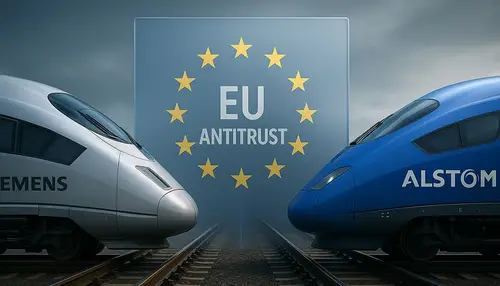
    The Siemens–Alstom Rail Merger That Collapsed Under EU Antitrust Scrutiny

    The Siemens–Alstom Rail Merger That Collapsed Under EU Antitrust Scrutiny

    The EU blocked Siemens-Alstom rail merger (2019) on competition grounds, rejecting political pressure for European industrial consolidation.

    In February 2019, the European Commission blocked the proposed merger between Siemens Mobility and Alstom, two of Europe’s largest rail manufacturers, citing concerns that the deal would significantly reduce competition in the European rail signaling and high-speed train markets. The decision marked a high-profile clash between EU competition policy and national industrial interests, igniting a broader debate over Europe’s ability to compete globally.

    Announced in 2017, the merger was positioned by Siemens and Alstom as a strategic response to intensifying competition from China’s state-backed CRRC Corporation, the world’s largest rail equipment manufacturer. By combining forces, Siemens and Alstom aimed to create a “European rail champion” capable of competing with global giants in infrastructure projects and high-speed rail systems.

    The deal envisioned Siemens holding a 50.67% stake in the combined entity, with integration of their rolling stock, signaling, and services businesses. Both companies emphasized that the merger would preserve European jobs and industrial leadership, while enhancing innovation and economies of scale.

    However, the European Commission’s antitrust regulators, led by Competition Commissioner Margrethe Vestager, viewed the merger through a different lens. Following an in-depth investigation, the Commission concluded that the merger would reduce competition in markets for high-speed trains and rail signaling systems, where Siemens and Alstom were already dominant players.

    The Commission expressed concerns that the combined entity would lead to higher prices, reduced choice, and less innovation for European rail operators and public procurement authorities. Importantly, the regulators found that the competitive threat from Chinese suppliers like CRRC was not yet significant within the EU, due to technical, regulatory, and market entry barriers.

    Siemens and Alstom offered a series of proposed remedies, including divestments and technology licensing, to address the Commission’s concerns. However, the Commission deemed these measures insufficient, arguing that they did not fully mitigate the competitive risks posed by the merger.

    The decision sparked outrage from the French and German governments, who had strongly backed the merger as part of a broader strategy to foster European industrial champions. French Economy Minister Bruno Le Maire and German Minister Peter Altmaier criticized the EU’s competition framework as outdated, calling for reforms to better address global competitive dynamics and geopolitical realities.

    Despite political pressure, the European Commission stood firm, emphasizing its mandate to protect competition within the EU single market and safeguard consumer interests. The decision was seen as a reaffirmation of the Commission’s commitment to strict antitrust enforcement, even at the expense of large-scale industrial consolidation.

    For Siemens and Alstom, the blocked merger forced a reevaluation of their growth strategies. Both companies continued to compete independently, with Alstom later acquiring Bombardier’s rail business in 2021 to strengthen its position.

    In retrospect, the Siemens-Alstom case became a landmark example of the tension between industrial policy ambitions and competition law enforcement in Europe. It highlighted the challenges of balancing the desire to build globally competitive companies with the need to maintain fair competition within domestic markets.

    Today, the failed Siemens-Alstom merger remains a pivotal case study in EU competition policy, illustrating the complexities of cross-border consolidation in strategic industries and the enduring debate over Europe’s industrial competitiveness in a globalized economy.

    08 / 10

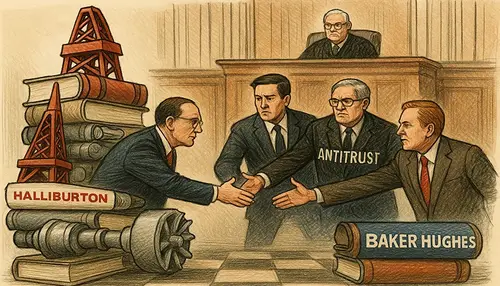
    When Halliburton’s $35B Baker Hughes Deal Collapsed Under Antitrust Pressure

    When Halliburton’s $35B Baker Hughes Deal Collapsed Under Antitrust Pressure

    Halliburton's $35B Baker Hughes bid collapsed in 2016 due to extensive market overlap and U.S. antitrust concerns in the oilfield services sector.

    In November 2014, Halliburton announced its intention to acquire Baker Hughes for approximately $35 billion in cash and stock, aiming to create the world’s largest oilfield services company. The deal was framed as a strategic response to falling oil prices and intensifying competition, as the energy sector faced a period of significant contraction.

    The proposed merger sought to combine the second- and third-largest players in the global oilfield services industry, challenging market leader Schlumberger. Halliburton projected annual cost synergies exceeding $2 billion, driven by consolidation of operations, technology integration, and streamlined supply chains.

    However, from the outset, the deal faced intense regulatory scrutiny. The U.S. Department of Justice (DOJ), European Commission, and other global regulators expressed concerns about the merger’s impact on competition across multiple oilfield service markets, including well completion, hydraulic fracturing, and drilling services.

    The DOJ’s primary objection centered on the substantial market overlap between Halliburton and Baker Hughes. In several key service lines, the combined company would have controlled more than 50% of the U.S. market, raising the risk of higher prices, reduced service quality, and diminished innovation. Unlike vertical mergers, this horizontal consolidation between direct competitors was seen as particularly problematic for maintaining a competitive market landscape.

    Halliburton and Baker Hughes proposed a series of asset divestitures to alleviate antitrust concerns. However, regulators found these remedies insufficient, arguing that they failed to address the fundamental competition issues, particularly given the specialized nature of oilfield services and the limited pool of capable buyers.

    In April 2016, the DOJ filed a lawsuit to block the merger, describing it as “an unprecedented consolidation in the oilfield services industry” that would eliminate head-to-head competition for critical services and harm oil and natural gas exploration companies. The DOJ emphasized that preserving competition in oilfield services was essential for maintaining fair pricing and fostering technological advancement in the sector.

    With mounting regulatory resistance and no viable path to approval, Halliburton and Baker Hughes mutually agreed to terminate the merger agreement in May 2016. As part of the termination, Halliburton paid Baker Hughes a $3.5 billion breakup fee, reflecting the deal’s high stakes and the companies’ initial confidence in securing approval.

    The collapse of the merger had significant repercussions for both companies. Halliburton refocused on organic growth and operational efficiencies, while Baker Hughes pursued alternative strategies, eventually merging with GE’s oil and gas business in 2017 to form Baker Hughes, a GE company.

    In the broader context of M&A, the failed Halliburton-Baker Hughes deal underscored the challenges of large-scale horizontal mergers in concentrated industries. The case became a benchmark for how regulators evaluate market share, competitive dynamics, and the adequacy of proposed remedies in preserving competition.

    In retrospect, Halliburton’s attempted acquisition of Baker Hughes serves as a cautionary tale of aggressive consolidation strategies facing regulatory roadblocks. It highlighted the critical role of antitrust enforcement in ensuring competitive markets, particularly in sectors with high barriers to entry and limited competition.

    Today, the Halliburton-Baker Hughes saga is remembered as a defining moment in U.S. antitrust history, illustrating the delicate balance between corporate scale ambitions and regulatory mandates to protect competition and consumer interests.

    09 / 10

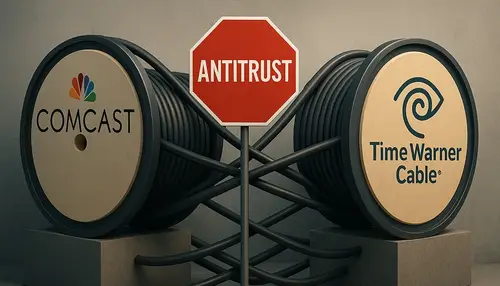
    The $45B Comcast–Time Warner Cable Deal Blocked by Regulators and Consumer Opposition

    The $45B Comcast–Time Warner Cable Deal Blocked by Regulators and Consumer Opposition

    Comcast's $45B Time Warner Cable bid (2014-2015) failed under regulatory scrutiny and strong opposition from consumers and public interest groups.

    In February 2014, Comcast announced its intention to acquire Time Warner Cable for approximately $45 billion in an all-stock deal, aiming to create the largest cable and broadband provider in the United States. The proposed merger was framed as a strategic move to expand Comcast’s broadband footprint, achieve scale efficiencies, and enhance its negotiating power with content providers.

    The combination of Comcast, already the largest cable operator, with Time Warner Cable, the second-largest at the time, would have given Comcast control over nearly 57% of the U.S. broadband market and around 30% of the pay-TV market. Comcast CEO Brian Roberts argued that the merger would enable faster broadband deployment and improved service quality for consumers, while emphasizing that Comcast and Time Warner Cable operated in separate geographic markets and did not compete directly.

    Despite these assurances, the proposed deal quickly drew intense scrutiny from regulators, consumer advocacy groups, and industry stakeholders. Critics argued that the merger would give Comcast excessive market power, enabling it to dictate terms to content providers, stifle competition, and harm consumers through higher prices and diminished service options.

    The Federal Communications Commission (FCC) and the Department of Justice (DOJ) both launched in-depth reviews of the merger. Key concerns included the impact on competition in broadband services, the merger’s potential to slow the deployment of high-speed internet, and Comcast’s growing influence over internet traffic and video content distribution.

    Public interest groups, including the Consumers Union and Free Press, vocally opposed the merger, warning that it would entrench Comcast’s dominance in a sector already plagued by limited competition. The controversial “net neutrality” debate further intensified scrutiny, as opponents feared Comcast could leverage its expanded broadband reach to prioritize its own content over competitors’.

    Throughout 2014 and into 2015, Comcast proposed various remedies to address antitrust concerns, including commitments to uphold net neutrality principles and potential divestitures of certain subscribers. However, these measures failed to assuage regulators, who remained concerned about the merger’s broader implications for competition and consumer choice.

    By April 2015, with mounting regulatory resistance and growing public opposition, Comcast abandoned the merger. The decision followed signals from the DOJ and FCC indicating they were preparing to block the deal on antitrust grounds.

    The collapse of the Comcast-Time Warner Cable merger marked a significant victory for antitrust enforcement in the telecommunications sector. It underscored the importance of maintaining competitive dynamics in broadband and pay-TV markets, where consumers often faced limited provider options.

    For Comcast, the failed merger prompted a strategic pivot toward organic growth and smaller acquisitions, including its successful bid for European broadcaster Sky in 2018. Time Warner Cable, meanwhile, became the target of another acquisition, eventually merging with Charter Communications in 2016.

    In retrospect, the Comcast-Time Warner Cable saga is remembered as a landmark case of regulatory intervention, illustrating the delicate balance between corporate consolidation ambitions and the imperative to protect competition and consumer interests.

    Today, the case serves as a defining example of how public interest advocacy, media scrutiny, and regulatory vigilance can collectively shape the outcome of high-profile mergers in critical infrastructure industries like broadband and media.

    10 / 10

    How BHP and Rio Tinto’s $116B Iron Ore Deal Was Blocked by Competition Authorities

    How BHP and Rio Tinto’s $116B Iron Ore Deal Was Blocked by Competition Authorities

    Inside the 2009-2010 attempt by BHP and Rio Tinto to merge their iron ore operations, a deal abandoned after facing intense antitrust scrutiny in Europe and Asia.

    In June 2009, BHP Billiton and Rio Tinto, two of the world’s largest mining companies, announced plans to combine their Western Australian iron ore operations into a 50-50 joint venture. The proposed $116 billion deal aimed to create massive efficiencies by consolidating infrastructure, reducing operational costs, and strengthening their competitive position in global iron ore markets.

    The venture was seen as a response to growing demand from China and rising competition in the iron ore sector. By merging their operations, BHP and Rio Tinto projected $10 billion in synergies, driven by shared rail networks, port facilities, and mining resources. Both companies framed the joint venture as a way to optimize production rather than consolidate sales or marketing efforts.

    However, regulators viewed the deal differently. The Australian Competition and Consumer Commission (ACCC), European Commission, and regulators in China, Japan, and South Korea all expressed concerns that combining two of the top three global iron ore producers (alongside Vale of Brazil) would significantly reduce competition in seaborne iron ore supply.

    The European Commission’s investigation focused on the potential for reduced competition, price coordination, and supply chain control. Given the high concentration in the iron ore market and the critical role of these commodities in steelmaking, regulators feared the joint venture would give BHP and Rio Tinto excessive market power to influence global prices and terms of trade.

    In addition, Asian steelmakers (particularly in China, the world’s largest iron ore consumer) voiced strong opposition. They argued that the joint venture would strengthen BHP and Rio Tinto’s bargaining position, limiting competition and driving up input costs for steel producers.

    Despite efforts to address regulatory concerns, including commitments to maintain independent marketing and sales functions, BHP and Rio Tinto struggled to persuade regulators that the venture would not distort competition. The complexity of the iron ore supply chain and the limited number of major suppliers amplified antitrust fears.

    By October 2010, facing insurmountable regulatory resistance, BHP and Rio Tinto jointly announced the termination of their iron ore joint venture plans. Both companies cited the inability to obtain necessary approvals within an acceptable timeframe as the primary reason for abandoning the deal.

    The failure of the joint venture had significant strategic implications. For BHP, it marked the second high-profile setback in its pursuit of iron ore consolidation, following the collapse of its hostile bid for Rio Tinto in 2008. For Rio Tinto, the abandoned venture reinforced its independence but required a reassessment of growth strategies in the iron ore sector.

    The collapse of the BHP-Rio Tinto deal underscored the power of global antitrust authorities in shaping industry dynamics, even in commodity markets traditionally dominated by a few players. It also highlighted the growing influence of Asian consumers, particularly China, in global competition assessments.

    In retrospect, the failed joint venture remains a landmark case of how competition concerns can override industrial logic, even when efficiency gains are evident. It demonstrated the complexities of cross-border mergers in resource-heavy industries where geopolitical, economic, and regulatory interests intersect.

    Today, the BHP-Rio Tinto joint venture saga is remembered as a defining example of how global regulators can thwart consolidation efforts in the name of preserving market competition and protecting consumer interests.

    Frequently Asked Questions

    Explore More

    Ready to Transform Your Interview Prep?

    Join 3,000+ students preparing smarter

    Join 3,000+ students who have downloaded this resource