


Overview
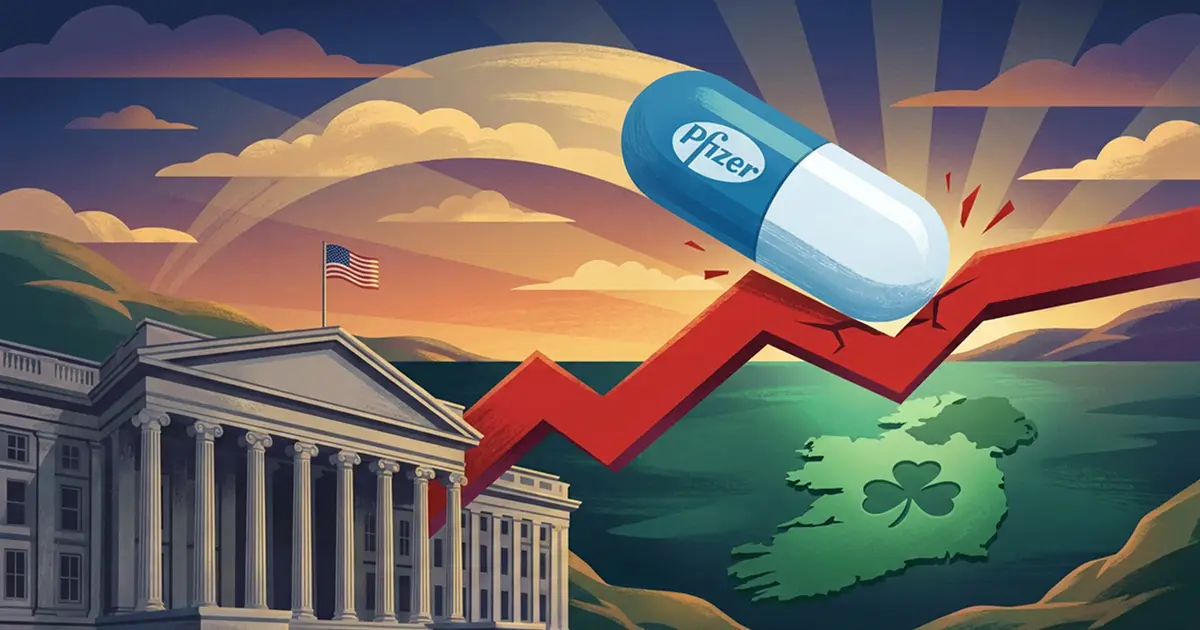
On November 23, 2015 Pfizer and Allergan plc announced the largest corporate tax inversion ever attempted: a stock merger valuing Allergan at $363.63 a share, roughly $160 billion, structured so that the smaller, Irish-domiciled Allergan would be the surviving parent and the combined group would no longer be a United States taxpayer. It was designed to clear every anti-inversion rule the US Treasury had written. It did not survive five months. On April 4, 2016 Treasury issued a temporary regulation that, by the companies' own conclusion, qualified as an "Adverse Tax Law Change" under their merger agreement, and within roughly thirty-six hours the deal was dead.
The deal is a case study for an uncomfortable reason. It was killed not by a hostile bidder, an antitrust court, or a financing collapse, but by the counterparty's own government rewriting a tax rule in a way many tax lawyers believed was aimed at this single transaction. That makes the central question genuinely contested rather than rhetorical: did Washington destroy a sound combination through an ad hoc, retroactive act of regulatory targeting, or was this a deal so dependent on a tax structure of disputed legitimacy, built on a counterparty assembled out of US companies precisely to make the structure work, that its collapse was the system functioning as designed? The account here is built from the parties' own filings and releases, the Treasury fact sheet and the regulation itself, the principals' on-record words, the federal court opinion that later voided the rule, and independent analysis from the press and from valuation specialists, and it lets each side speak.
Why Pfizer Needed a Deal It Could Not Do at Home
The tax wall Pfizer could not climb
Pfizer's problem was structural, not operational. The United States taxed corporate profits at a 35% federal statutory rate and, almost uniquely among large economies, taxed its multinationals on worldwide income, with the residual US tax on foreign earnings deferred until the cash was brought home. Pfizer's effective tax rate ran in the low-to-mid twenties (about 23.4% over the first nine months of 2015), well below the headline rate but far above the 12.5% Irish corporate rate its competitors domiciled in Ireland enjoyed. The gap was not a rounding difference; on a company earning tens of billions, it compounded into a permanent competitive handicap against rivals that had already moved.
The sharper constraint was trapped cash. Pfizer held on the order of $74 billion of foreign earnings offshore, money it could deploy abroad but could not repatriate to fund US dividends, buybacks, or deals without triggering the residual US tax. A US multinational in that position is not short of money; it is short of *usable* money, and that distinction is the entire motive. The way tax drives where and how a deal is done, not just whether it pays, is a recurring theme in the tax architecture of an acquisition, and Pfizer was its most prominent example.
- Tax inversion
A transaction in which a US company becomes a subsidiary of a new foreign parent, usually through a merger with a smaller foreign company, so the combined group is taxed as a foreign rather than a US corporation. The operating business and management often barely move; what changes is the tax residence of the parent, and with it the group's exposure to US tax on worldwide income and on repatriated cash.
There were two ways to read this. Pfizer's chief executive Ian Read argued the burden was the US tax code's fault: American companies were being forced to compete internationally while carrying a tax structure no other major country imposed, and an inversion was a rational, legal response to that disadvantage. Critics argued the opposite, that Pfizer's effective rate already reflected aggressive global tax planning and that an inversion was less about survival than about converting an already-low rate into a near-zero one at other taxpayers' expense. Both readings would harden into the public fight that came later. The counterfactual worth holding in mind from the start: a move to a territorial system at a competitive rate would moot the entire rationale, and the United States was one tax reform away from exactly that.
AstraZeneca, the dress rehearsal
This was Pfizer's second attempt to solve the problem by acquisition. In 2014 it pursued AstraZeneca, the Anglo-Swedish drugmaker, in a bid that reached roughly $118 billion (about GBP 69 billion, at GBP 55.00 a share in its final proposal) and was explicitly structured to move Pfizer's tax domicile to the United Kingdom. AstraZeneca's board rejected the final proposal as undervaluing the company and its prospects, and objected throughout to a structure it saw as driven by tax and cost-cutting rather than by science. UK political resistance over research jobs compounded the rejection.
The failure taught Pfizer two lessons it applied to Allergan. First, a public, hostile, tax-led pursuit of a large operating company invited a backlash that could kill the deal on politics alone. Second, the inversion mechanics were easier to defend if the target was already foreign-domiciled, so the structure read as joining an existing foreign group rather than fleeing the country. Had AstraZeneca said yes in 2014, Pfizer would very likely have completed an inversion before Treasury built the tools that later stopped one; the timing, not just the structure, is part of why Allergan ended the way it did.
The conglomerate Pfizer wanted to split
The inversion was also tied to a second corporate project. Pfizer had been signalling for years that it might separate into two businesses, an innovative arm built on patent-protected drugs and vaccines and an established arm of off-patent and mature products, on the theory that the market was undervaluing both inside one conglomerate. A clean split needs scale on each side and the financial flexibility to stand up two companies, and a lower tax rate plus access to the offshore cash would have funded exactly that. Allergan's established-products and specialty portfolio would have bulked up the non-innovative side enough to make a separation credible.
So Allergan was not a single-purpose tax trade in Pfizer's framing. It was meant to do three things at once: lower the rate, unlock the trapped cash, and assemble the pieces for a break-up the company had wanted for years. Whether those goals justified the price is a separate question the deal's critics pressed hard, and the next sections take it up; the point here is that the strategic story Pfizer told was real, even if the tax story was doing most of the work.
The Counterparty Built for the Trade
How Watson became "Allergan plc"
Allergan in 2015 was not the Allergan that made Botox. It was the end state of one of the most aggressive roll-ups in pharmaceutical history. Watson Pharmaceuticals, a US generics company, bought Switzerland's Actavis Group in 2012 for about EUR 4.25 billion and took the Actavis name. In October 2013 Actavis acquired Ireland-incorporated Warner Chilcott for roughly $8.5 billion in stock, a transaction whose central feature was that it moved the group's tax domicile to Ireland. In July 2014 Actavis bought Forest Laboratories, a US specialty drugmaker, for about $25 billion. In March 2015 it completed the $70.5 billion cash-and-stock acquisition of the original Allergan, Inc., a US company, and adopted its name.
The pattern is the analytical point, not the trivia. The entity Pfizer agreed to merge with was an Irish-domiciled holding company whose bulk had been assembled, within a few years, almost entirely out of US operating companies. Its defenders, including its management, presented this as a deliberate new model, "Growth Pharma," that bought growth and commercial scale rather than betting on slow internal research. Its critics, including the valuation specialist Aswath Damodaran, made the opposite case: that Allergan's growth was acquired rather than organic and therefore "untested," and that serial acquisition accounting made the company hard to value honestly. Hold both views; the case does not need to resolve them to see the consequence. By late 2015 Allergan was, in tax terms, a US-built business wearing an Irish wrapper, which is precisely the profile the rule that killed the deal would single out.
Brent Saunders, the dealmaker as the product
Allergan's chief executive, Brent Saunders, was the human expression of that model. He had come up as a protege of the serial pharmaceutical operator Fred Hassan, helped integrate Schering-Plough after Merck acquired it for about $41 billion in 2009, then ran Bausch & Lomb and sold it to Valeant for $8.7 billion in 2013. He took over the Actavis/Allergan vehicle and, by his own account, built a top-tier pharmaceutical company in roughly two years almost entirely through transactions rather than the laboratory.
An exceptional global pharmaceutical company and a leader in a new industry model, Growth Pharma.
A company run by a dealmaker whose record is buying and selling companies is, structurally, a company that is for sale. That is not a criticism, it is a description, and it matters to the case: a tax-driven exit at a large premium was entirely consistent with how Allergan had always been managed. When Pfizer came with $363.63 a share, it was not asking Saunders to do something out of character. It was offering the next, and largest, transaction in a career built on them.
Engineering a $160 Billion Reverse Takeover
Why the smaller company "bought" the bigger one
Pfizer was roughly $200 billion of market value; Allergan was a little over half that. Yet the legal form was Allergan acquiring Pfizer. That inversion of the apparent buyer and seller was the whole point, and it ran on one provision of the US tax code. Under Section 7874, whether a foreign parent is respected as foreign or treated as a US taxpayer depends on the "ownership fraction": the share of the new foreign parent that the former shareholders of the US company hold *by reason of* having held US stock.
- Section 7874 ownership thresholds
Section 7874 sets two cliffs based on how much of the new foreign parent former US-company shareholders own. Below 60%, the inversion is generally respected and the tax benefits are available. At 60% or more but under 80%, the foreign parent is respected but the US company is an "expatriated entity" subject to punitive limits for ten years. At 80% or more, the foreign parent is simply treated as a US corporation for all tax purposes, and the inversion delivers nothing.
The structure was therefore not financial vanity; it was threshold management. Making the foreign company the legal parent through a reverse-merger structure, with former Pfizer holders ending below the 80% line (and ideally below 60%), was the difference between a group taxed in Ireland and a group that had spent $160 billion to change nothing. Everything in the deal's design served that arithmetic, which is exactly why the arithmetic was where it could be attacked.
| Former US holders own | Tax treatment of the foreign parent |
|---|---|
| Under 60% | Inversion respected; full benefits available |
| 60% to under 80% | Foreign parent respected; US side punitively limited for 10 years |
| 80% or more | Treated as a US corporation; inversion delivers nothing |
What Pfizer holders were actually offered
The consideration was engineered to land the ownership fraction in the safe zone. Each Allergan share would convert into 11.3 shares of the combined company; each Pfizer share into one. Pfizer holders could elect cash instead of stock, with aggregate cash set no lower than $6 billion and no higher than $12 billion and subject to proration, a lever that fine-tuned the post-deal ownership split. Assuming the full $12 billion of cash, former Pfizer stockholders would hold about 56% of the combined company and Allergan holders about 44% on a fully diluted basis. The new parent, Allergan plc, would be renamed "Pfizer plc," keep its Irish legal domicile, run global operations from New York, and trade on the NYSE under PFE. Read would be chairman and chief executive; Saunders president and chief operating officer; the board fifteen seats, eleven from Pfizer and four from Allergan.
| Term | Detail |
|---|---|
| Headline value | $363.63 per Allergan share, ~$160 billion |
| Exchange ratio | 11.3 combined shares per Allergan share; 1 per Pfizer share |
| Cash election | $6 billion to $12 billion, prorated |
| Ownership (full cash) | ~56% former Pfizer / ~44% Allergan |
| Parent / domicile | Allergan plc, renamed "Pfizer plc," Irish domicile, NY operations |
| Synergies | More than $2 billion over the first three years |
| Target tax rate | 17% to 18% in the first full year |
Pfizer presented operating logic too: more than $2 billion of synergies over three years, an accretion path that reached double digits by 2019, and a first-year tax rate of 17% to 18%. But the synergy number was small against a transaction of this size, and the premium was not. Allergan shares had run up roughly 19% on deal speculation before the announcement, and the agreed price embedded a premium for control on the order of 30%, comfortably more than $30 billion of value, against synergies of about $2 billion a year. Whether a combination's cost and revenue synergies can ever carry a premium of that shape is a standard interview tension, covered in synergies in M&A; here, independent analysts concluded they could not, and that the gap was being filled by tax. That is the cleanest statement of the deal's vulnerability: strip out the tax benefit and the price stopped making sense, so the tax benefit had to hold.
Want the technical reps behind a deal like this? Practice 1,000+ interview questions on M&A structuring, accretion, and tax in our iOS app: download it here.
The two warning shots they thought they had cleared
Pfizer did not walk into this blind. Treasury had already moved against inversions twice. Notice 2014-52, issued in September 2014, attacked post-inversion techniques and was potent enough to trigger the collapse of AbbVie's roughly $54 billion agreement to acquire Shire and to force Medtronic to restructure the financing of its roughly $43 billion Covidien deal away from "hopscotch" loans. Notice 2015-79 followed in November 2015, days before the Pfizer-Allergan signing, tightening third-country and post-inversion rules further.
The deal was deliberately built to clear both. The parties' position, which became the heart of the later grievance, was that they had read the published rules carefully, structured the transaction to comply with them, and signed only when satisfied they were inside the lines Treasury itself had drawn. The opposing view is that Treasury had now moved against inversions twice in fourteen months and publicly promised to keep going, so any party signing a record-setting inversion in that environment was knowingly betting that the regulator would stop escalating. Which of those is the fair reading is exactly what the rest of the case argues about.
The Politics That Made This Deal a Target
An inversion in an election year
Timing turned a tax structure into a political event. The announcement landed in November 2015, into the opening months of a presidential campaign in which corporate tax fairness was already a live issue. Hillary Clinton called the merger "just offensive" and said inversions and related loopholes would cost American taxpayers more than $80 billion over a decade; Bernie Sanders attacked it from the left; the eventual Republican nominee ran against offshoring generally. The largest inversion in history, announced by a household-name American company, became a campaign symbol within days.
One of the most insidious tax loopholes out there.
President Obama's framing was sharper still: companies that inverted continued to rely on US infrastructure, courts, and an educated workforce while, in his words, effectively renouncing their citizenship to avoid the bill, and he called the practice unpatriotic. One can treat this as legitimate democratic pressure on a real revenue leak, or as the executive branch publicly marking one lawful, pending private transaction for destruction. The case does not need to choose to record the consequence: by early 2016 the political cost of Treasury *not* acting had become higher than the legal cost of acting.
What Treasury said it could not do
Treasury Secretary Jacob Lew had spent over a year making a careful, two-part argument: that inversions were a genuine problem, but that the durable fix was legislation, and that the executive branch could only slow the practice administratively, not end it. He repeatedly urged Congress to pass anti-inversion law and warned that regulation alone would always be a second-best instrument.
That framing matters because it sets up what came next as the maximal version of the second-best instrument. Having said for a year that Treasury's hands were substantially tied, Treasury then took the most aggressive administrative action it had yet attempted, on a timeline that collided directly with the highest-profile inversion on the board. Defenders read that as Treasury finally using authority it had always possessed; critics read it as Treasury conceding it lacked the tool and then using one anyway. Both readings run straight into the rule itself.
The Rule Written to Kill One Deal
The serial-inverter mechanic
On April 4, 2016 Treasury issued temporary regulations alongside proposed earnings-stripping rules. The provision that mattered here was the multiple-domestic-entity-acquisition rule, Temporary Regulation Section 1.7874-8T, quickly nicknamed the "serial inverter" rule. Its mechanism was narrow and surgical. When computing the Section 7874 ownership fraction for a new inversion, the rule disregards stock of the foreign parent that was issued in *its own acquisitions of US companies during the 36 months before the new deal's signing*, removing that stock from the denominator of the fraction.
Start with the ownership fraction
Former US-company holders' stock in the new foreign parent, divided by the parent's total stock.
Identify the look-back
Find every US company the foreign parent itself acquired in the 36 months before this deal was signed.
Strip the stock
Remove from the denominator the foreign-parent shares that were issued to make those prior US acquisitions.
Recompute
A smaller denominator raises the fraction; the same deal now lands in a higher, punitive ownership band.
The drafters' own worked example shows the force of it. Take a foreign company worth $100 that buys two US companies for $50 each, then acquires a US target for $150. Without the rule, the target's holders own $150 of a $350 company, about 43%, comfortably below the inversion cliffs. With the rule, the prior US acquisitions are stripped out, the acquirer is treated as worth $100, and the target's holders are now deemed to own $150 of $250, about 60%, into the punitive zone. Treasury described this as closing a loophole in which a foreign company "stuffs" itself with US assets purely to make later inversions clear the thresholds. Pfizer and Allergan described it, once they saw whose acquisition history fit the example, as a rule reverse-engineered from their deal.
Why it specifically decapitated this deal
Apply the rule to the facts. Allergan's size in late 2015 had been built, in large part, by acquiring US companies inside exactly that 36-month window: Warner Chilcott in October 2013, Forest Laboratories in July 2014, and the original Allergan, Inc. in March 2015, all within three years of the November 2015 Pfizer signing. Strip the foreign-parent stock issued to make those US acquisitions out of the denominator, and Allergan's deemed size for Section 7874 purposes collapsed. The former Pfizer shareholders' ownership fraction, engineered to sit safely in the mid-fifties, was pushed up through the 80% line.
| Allergan US-entity acquisition | Closed | Approx. value | In 36-month look-back |
|---|---|---|---|
| Warner Chilcott | Oct 2013 | $8.5 billion | Yes |
| Forest Laboratories | Jul 2014 | $25 billion | Yes |
| Allergan, Inc. | Mar 2015 | $70.5 billion | Yes |
Crossing 80% is not a partial penalty. Under Section 7874(b), at that level the new foreign parent is treated as a US corporation for all federal tax purposes. "Pfizer plc" would have been, in the eyes of the Internal Revenue Code, simply a US taxpayer with an Irish mailing address. The inversion would have delivered none of the rate reduction, none of the access to offshore cash, none of the rationale that filled the gap between the price and the synergies. The benefit did not shrink; it went to zero, which is why the boards concluded within hours that the merger agreement's "Adverse Tax Law Change" condition was met.
The other barrels: third-country and earnings stripping
The serial-inverter rule was sufficient on its own, but it did not travel alone. The same package tightened a "third-country" rule that treated certain combinations using a new third-country parent as automatically over the 80% line, and Treasury simultaneously proposed regulations under Section 385 to recharacterize a great deal of intercompany debt as equity.
- Earnings stripping
After an inversion, the foreign parent lends to its US subsidiary; the US unit deducts the interest against its high-taxed US income and pays it to the low-taxed parent. The effect is to "strip" taxable earnings out of the US base even on profits that never left the country. Limiting it removes much of an inversion's ongoing value, separate from the one-time domicile change.
This is why the action was more than a single-deal kill. Earnings stripping was the engine that made an inversion keep paying year after year; constraining it meant that even an inversion that somehow cleared the ownership test would deliver far less than its sponsors projected. Treasury was not only knocking over Pfizer-Allergan, it was dismantling the economic model that made large pharmaceutical inversions worth attempting. Defenders called that comprehensive loophole closure; critics called it a sweeping rule whose collateral damage reached ordinary cross-border financing that had nothing to do with inversions. That dispute did not stay rhetorical; it went to court.
Five Months, Then Nothing
Thirty-six hours from rule to rubble
The end was faster than the negotiation had been. Treasury released the regulations on Monday, April 4, 2016. Pfizer's and Allergan's advisers concluded almost immediately that the serial-inverter rule eliminated the tax benefit and therefore met the "Adverse Tax Law Change" trigger in the merger agreement, and the companies announced mutual termination on April 6. Pfizer agreed to pay Allergan $150 million as reimbursement for transaction expenses. The structuring of that exposure is the underappreciated piece. The merger agreement carried a reverse-termination fee of up to roughly $3.5 billion for ordinary terminations, the figure the press nicknamed the "prenup," but the parties had specifically capped the fee at no more than $400 million if the deal died because of an adverse change in tax law, and in the event Pfizer owed only the $150 million of expenses. They had, in other words, priced the precise risk that the government would change the law to break the deal and agreed in advance that almost no money would move if it did.
| Announced deal | What actually happened | |
|---|---|---|
| Value | ~$160 billion combination | Terminated |
| Structure | Reverse-merger inversion to Ireland | Unwound, no inversion |
| Trigger | Close expected 2H 2016 | "Adverse Tax Law Change," Apr 2016 |
| Money that changed hands | up to $12 billion cash to Pfizer holders | $150 million expenses, Pfizer to Allergan |
That table is the entire financial outcome of the largest inversion ever attempted. A $160 billion combination, eighteen months of planning, and the only cash that moved was $150 million of expenses, roughly a tenth of one percent of the headline value. For all the noise about who would win the combined company, the contract had already decided that if Washington moved first, essentially no one would pay for the wreckage.
Read's grievance, Saunders' shrug
The principals' reactions defined the public argument and seeded the litigation. Ian Read, in a Wall Street Journal op-ed and subsequent interviews, called Treasury's action ad hoc and arbitrary, "unprecedented, unproductive and harmful to the U.S. economy," argued it interpreted the tax laws in ways never done before, and warned that rules changed arbitrarily and applied retroactively would deter long-term investment and ultimately push more US companies into foreign hands. Saunders was more wry than aggrieved.
A very fine job of constructing a rule here, a temporary rule, to stop this deal.
Saunders added that changing the rules after the game had started was "a bit un-American." Read in the same register as a complaint about the rule of law; Saunders as a complaint about fairness. The opposing view, voiced loudly at the time, was simpler: a company that builds a transaction whose entire value is a tax result it concedes is the point cannot claim to be shocked when the taxing authority changes the tax result. Both positions are coherent, which is why neither the press nor, later, the court fully vindicated either one.
Did the Government Cheat, or Did the Deal Deserve to Die
The courtroom answer
The legal challenge gave a partial, precise answer. The US Chamber of Commerce and the Texas Association of Business sued, and in September 2017 the US District Court for the Western District of Texas struck down the serial-inverter regulation. The reasoning is the part that matters for the case. The court did *not* hold that Treasury lacked authority to write such a rule, and it did *not* hold that the rule was arbitrary or capricious in substance; it found the opposite on both. It voided the rule on a procedural ground: Treasury had made it immediately effective without the notice-and-comment period the Administrative Procedure Act requires.
That outcome cuts cleanly down the middle of the dispute. Read's "rule of law" objection was vindicated on process: a court agreed Treasury had skipped a required step and the rule was unlawful as issued. But the same court rejected the stronger claim, that Treasury had no business reaching this result at all, and explicitly found the agency had the authority and had not acted irrationally. The rule died on how it was made, not on whether it could be made, and by the time the court ruled in 2017 the holding was academic for these parties, because the deal was eighteen months gone and the broader tax landscape had already shifted.
The economics that aged the deal out
The most damaging verdict on the deal was not the government's; it was the contemporaneous one from independent valuation, and it had been delivered before Treasury acted. Aswath Damodaran, analyzing the announced terms in November 2015, concluded that the inversion added real value only on an assumption he considered unsafe.
A bad deal ... at the wrong time and at the wrong price.
His core point was that the value of the tax benefit, which he sized in the mid-twenties of billions, rested on the premise that US tax law would never change, and he flagged the roughly 30% premium, more than $30 billion, as unsupported by the modest synergies. Both calls aged well. In December 2017, the Tax Cuts and Jobs Act cut the US federal corporate rate from 35% to 21% and moved the country toward a quasi-territorial system with a one-time deemed repatriation. The single largest reason to invert, the gap between the US and foreign systems and the wall around offshore cash, was substantially reduced by domestic legislation within two years. The honest reading is that Treasury did not so much destroy lasting value as accelerate the demise of a structure that tax reform was about to deflate anyway. What it could not resolve is the part Damodaran isolated from the start: stripped of tax, was the business combination worth a $30 billion premium? On the independent economics, the answer was no.
What each side did instead
The counterfactual played out in public. Pfizer did not complete the conglomerate split the inversion was partly meant to fund on the original terms; it remained a single company, kept acquiring (Hospira for about $17 billion, Anacor for roughly $5 billion, Medivation for about $14 billion), and only years later separated its established-medicines business by combining the Upjohn unit with Mylan to form Viatris in 2020, through a spin-merge rather than an inversion. Allergan announced a $10 billion buyback, closed the $40.5 billion sale of its generics business to Teva, and never recovered. Its stock had peaked around $320 in mid-2015; Saunders ultimately sold the company to AbbVie in a roughly $63 billion deal announced in 2019, a price the company's own chroniclers noted was still about 40% below that 2015 high. For readers preparing to discuss this, the framing of who was helped and who was harmed is the substance of how to talk about a pharma deal in an interview, and here the asymmetry is the answer: Pfizer absorbed the loss of a tax structure and moved on largely intact; Allergan, the company built to be sold, lost its largest buyer and spent the next four years drifting toward a distressed exit.
So the verdict the record actually supports is split, and it should be stated that way rather than forced. On process, the critics were right and a federal court said so: the rule was issued unlawfully and was, by the candid admission of its nickname and timing, aimed at this transaction. On substance, the deal's defenders were on weaker ground than the politics suggested: a court found Treasury had the authority and had not acted irrationally, independent valuation had called the price unjustified by anything other than tax before the government moved, and the tax reform that followed would have hollowed out the rationale regardless. The genuinely open question, the one neither the litigation nor the economics closes, is the legitimacy of a procedurally clean version of the same rule: a targeted, prospective regulation, properly noticed, that did exactly what this one did. The court strongly implied that rule would have stood. Whether a government *should* write a rule whose acknowledged purpose is to stop one named, lawful transaction is a question the Pfizer-Allergan record sharpens but, honestly read, does not answer.
Sources
- 1Pfizer, "Pfizer and Allergan to Combine" (November 23, 2015).
- 2Pfizer, "Pfizer Announces Termination of Proposed Combination with Allergan" (April 6, 2016).
- 3US Department of the Treasury, "Fact Sheet: Treasury Issues Inversion Regulations and Proposed Earnings Stripping Regulations" (April 4, 2016).
- 4Jones Day, "Treasury Releases Significant Temporary Anti-Inversion Regulations and Proposed Earnings Stripping Regulations" (April 2016).
- 5AstraZeneca, "AstraZeneca Board rejects Pfizer's final proposal" (May 19, 2014).
- 6The Washington Post, "Pfizer and Allergan to merge in $160 billion inversion" (November 23, 2015).
- 7CNBC, "CNBC Transcript: Allergan CEO Brent Saunders Speaks with CNBC's Squawk on the Street" (April 6, 2016).
- 8The Hill, "Pfizer CEO: Treasury's tax action a 'shot' at us" (April 2016).
- 9Aswath Damodaran, "Value and Taxes: Breaking down the Pfizer-Allergan Deal" (November 2015).
- 10The Boston Globe, "Obama champions new steps to deter corporate tax inversions" (April 5, 2016).
- 11STAT News, "How Brent Saunders' Allergan experiment failed" (June 26, 2019).
- 12Time, "Pfizer-Allergan Merger Will Save Firm $2.1 Billion in Taxes" (November 2015).