


A Global AI Sell-Off Rattles Markets, and Korea Trips a Circuit Breaker
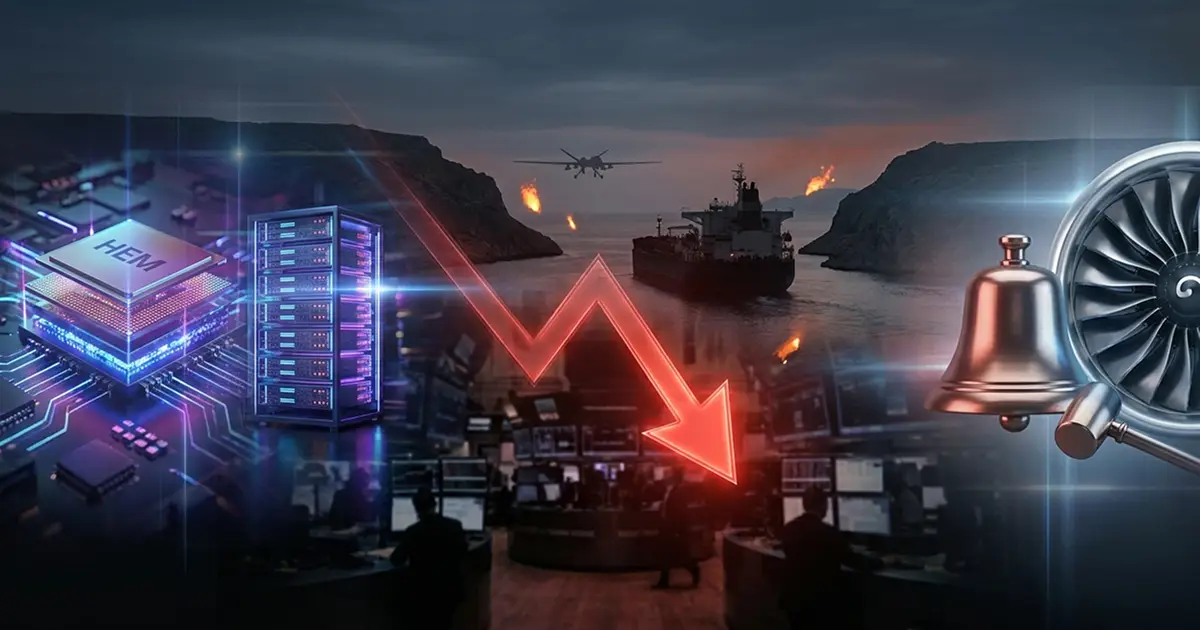
The year's relentless AI rally finally cracked. On Tuesday, June 23, technology and chip stocks sold off around the world, with the Nasdaq falling 2.21% and the S&P 500 down 1.44%, while the Dow, lighter on tech, barely moved. The damage was worst in Asia: South Korea's Kospi plunged about 10%, tripping a circuit breaker that forced a 20-minute halt, as SK Hynix and Samsung Electronics, two of the world's leading memory makers, each fell more than 12%. Nvidia, Micron, and AMD led the retreat in the US.
There was no single trigger, which is part of what unnerved investors. The selling reflected a cocktail of fears: that the stunning surge in AI stocks had simply run too far, that the inflation stoked by the Iran war and the closure of the Strait of Hormuz could force interest rates higher, and that the Federal Reserve, which had turned hawkish a week earlier, was serious about keeping policy tight. Higher rates matter doubly for AI, because they raise the cost of the enormous debt now funding the data-center build-out, a vulnerability we explored in our look at how the AI boom is financed.
Then the data poured fuel on the fire. On June 25, the May PCE index, the Fed's preferred inflation gauge, came in at 4.1% year over year, the highest since April 2023, with the core reading at 3.4%. That kept a September rate hike firmly in play and gave the bears more ammunition. The slide never really reversed: the Nasdaq fell in every session and ended the week down about 4.6%, more than 6% below its early-June record, with Friday's losses finally shrinking to near zero. A late-week New York Times report that OpenAI was weighing pushing its own IPO into next year, amid the turmoil in AI shares, only deepened the gloom.
The episode is a vivid reminder that the AI trade and the macro picture are now joined at the hip. The same higher-for-longer rates the Fed is signaling lift the cost of the trillions in borrowing behind AI infrastructure, so an inflation surprise hits AI names twice over, once through their valuations and again through their financing. After a rally that had looked unstoppable, it was the sharpest setback yet, and a real test of whether the market's conviction in AI can survive a less friendly rate environment.
 Free Interview PDF Guide