


Why Bankruptcy Chapters Show Up in Interviews
When a company cannot pay its debts, the question is not simply "does it go bankrupt?" but "which kind?" The answer decides whether the business keeps its lights on or gets dismantled for parts, and that single fork is what an interviewer is probing when they ask you to explain Chapter 11 versus Chapter 7. It is a favorite in restructuring and credit interviews because it tests whether you understand that bankruptcy is a financial tool with very different outcomes, not just a synonym for failure.
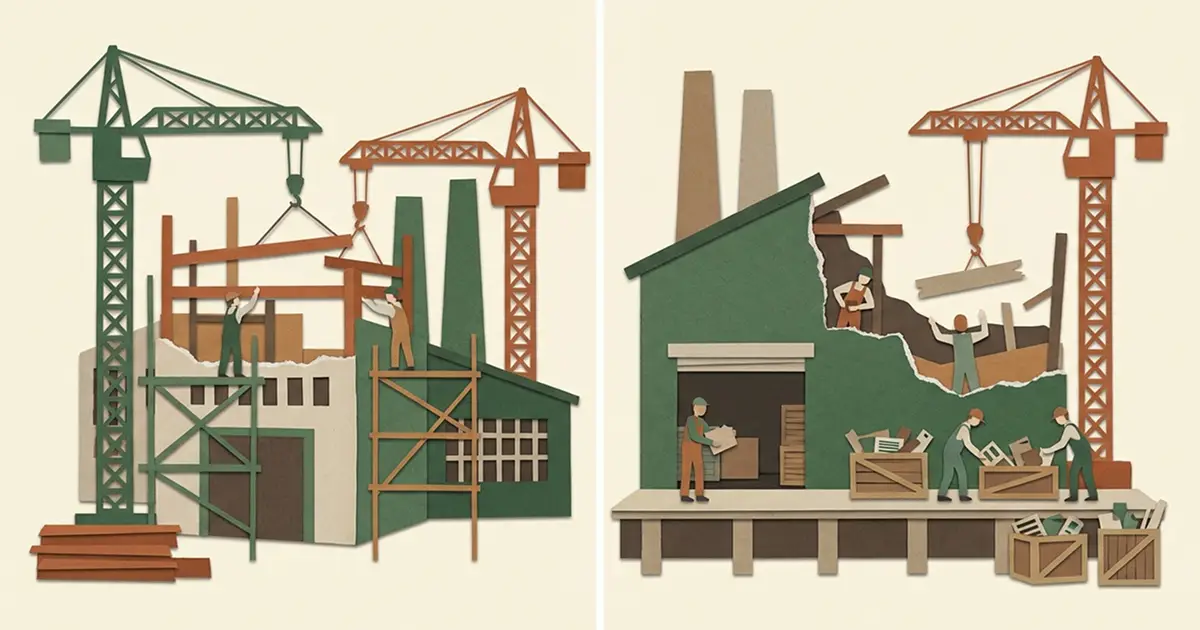
The distinction is simple to state and rich to explore. Chapter 11 is reorganization: the company stays alive, renegotiates its obligations, and tries to emerge as a healthier going concern. Chapter 7 is liquidation: the company stops operating, a trustee sells everything, and the proceeds are handed out to creditors in a strict order. This post walks through what each chapter is for, who controls the company, the machinery of a Chapter 11 case, the priority waterfall that decides who actually gets paid, and the common path where a failed Chapter 11 is converted into a Chapter 7. Recent filings give us live examples to ground all of it.
Bankruptcy filings have been climbing, which is part of why this topic is timely. Commercial Chapter 11 filings in the first quarter of 2026 rose to 2,422, up sharply from 1,764 a year earlier, and total US bankruptcy filings rose roughly 11% in 2025. A wave of large, complex cases means restructuring desks are busy and the interview question is more relevant than it has been in years.
Chapter 11 vs Chapter 7 at a Glance
Before the mechanics, here is the comparison every interviewer wants you to be able to reproduce on demand. This table is the mental map; the sections below explain each row.
| Feature | Chapter 11 | Chapter 7 |
|---|---|---|
| Core purpose | Reorganize and survive | Liquidate and shut down |
| Business operations | Continue operating | Cease operating |
| Who is in control | Debtor-in-possession (existing management) | Court-appointed trustee |
| Goal | Confirmed plan of reorganization | Sell assets, distribute cash |
| New financing | DIP financing available | None; assets are sold |
| Typical outcome | Emerge as going concern | Dissolution |
| Speed and cost | Slow and expensive | Faster and cheaper |
| Who uses it | Companies with viable franchises | Companies with no path forward |
The whole comparison comes down to one judgment: is the business worth more alive than dead? If the enterprise value of the reorganized company exceeds what its assets would fetch in a sale, Chapter 11 makes sense. If not, Chapter 7 (or a liquidating plan) is the honest answer.
What Each Chapter Is Actually For
The two chapters solve different problems, and the choice between them turns on whether the company has a viable future.
Chapter 11: reorganization
Chapter 11 exists to preserve a business that is worth saving. The company, now called the debtor, gets breathing room from its creditors and a chance to renegotiate debts, shed unprofitable contracts and leases, raise new financing, and propose a plan of reorganization that creditors vote on and a court approves. The aim is to fix an over-leveraged or temporarily distressed company without destroying the value that comes from keeping it running. This is where most large corporate bankruptcies you read about take place, and it is the natural home of restructuring investment banking.
Chapter 7: liquidation
Chapter 7 is the end of the road. There is no plan and no reorganization. A trustee is appointed, takes possession of the company's assets, sells them, and distributes the cash to creditors according to the priority rules in the Bankruptcy Code. The business stops operating, the employees are let go, and the legal entity is wound down. Companies file Chapter 7 (or convert into it) when there is simply no credible path to a profitable future, so preserving the going concern would only burn more value.
Who Runs the Company: Debtor-in-Possession vs Trustee
One of the sharpest differences between the two chapters is who holds the keys once the case begins, and this is a detail interviewers love because candidates often get it backwards.
In Chapter 11, existing management usually stays in charge as the debtor-in-possession. They keep running the business, subject to court oversight and creditor scrutiny, and they hold the exclusive first right to propose the reorganization plan. In Chapter 7, management is removed and a trustee takes over with a single mandate: liquidate the estate and pay out the proceeds. The contrast captures the philosophy of each chapter. Chapter 11 trusts the people who know the business to fix it; Chapter 7 assumes the business cannot be fixed and brings in a neutral party to sell it.
- Debtor-in-Possession (DIP)
A company that has filed for Chapter 11 and continues to operate its business and control its assets while under bankruptcy protection, rather than handing control to a trustee. The debtor-in-possession has the powers and duties of a trustee, including the ability to borrow new money and to propose a plan of reorganization, but remains under the supervision of the bankruptcy court.
How a Chapter 11 Actually Works
A Chapter 11 case is a sequence of legal and financial steps, and understanding the order is what separates a memorized definition from real fluency. Each step below exists to balance keeping the company alive against protecting the creditors who are owed money.
The filing and automatic stay
The company files its petition, and an automatic stay immediately freezes all collection efforts, lawsuits, and foreclosures against it.
First-day motions and DIP financing
The debtor asks the court for permission to pay employees, keep the lights on, and access new debtor-in-possession financing to fund operations.
Operate and negotiate
Management runs the business as debtor-in-possession while negotiating with creditors over how debts will be treated.
File the plan of reorganization
Within an exclusivity window, the debtor proposes a plan that classifies claims and lays out who gets paid what.
Vote and confirmation
Creditors vote by class, and the court confirms the plan if it meets the legal tests.
Emergence or conversion
The company emerges from Chapter 11 with a fixed balance sheet, or, if no plan can be confirmed, the case converts to a Chapter 7 liquidation.
The automatic stay
The moment a company files, the automatic stay takes effect. It is an immediate injunction that stops creditors from collecting, suing, repossessing, or foreclosing. The stay is what gives the debtor the breathing room to reorganize rather than being torn apart by individual creditors racing to grab assets. Without it, the first creditor to the courthouse would win and an orderly process would be impossible.
- Automatic Stay
An injunction that arises automatically when a bankruptcy petition is filed, halting nearly all collection actions, lawsuits, foreclosures, and repossessions against the debtor. It freezes the situation so the company can reorganize in an orderly way, and creditors must seek the court's permission before taking action against the debtor or its property.
DIP financing
A distressed company still needs cash to pay employees and suppliers while it reorganizes. Debtor-in-possession financing, or DIP financing, is new debt raised after filing, and lenders are willing to provide it because the Bankruptcy Code lets it jump ahead of existing creditors in priority. That super-priority status, often layered on top of strict milestones, makes DIP loans relatively safe for the lender and is a core piece of how a leveraged company keeps operating through a restructuring. When auto-parts maker First Brands Group filed in late 2025, it arranged a DIP facility with an immediate infusion of new money so the business could keep running through the case.
The plan of reorganization and exclusivity
The centerpiece of Chapter 11 is the plan of reorganization, which sorts every claim into classes and spells out how each class will be treated, whether paid in full, paid partially, or converted into equity of the reorganized company. The debtor gets an exclusive period, generally 120 days to propose a plan and up to 180 days to win its confirmation, before any creditor can put forward a competing plan. This exclusivity is a major source of the debtor's leverage in negotiations, which is one reason the existing debt's covenants and the negotiating posture going in matter so much.
Build real restructuring fluency: Practice 1,000+ technical and behavioral questions with worked answers, download our iOS app and walk into your credit or restructuring interview ready for the follow-ups.
The 363 sale
Not every Chapter 11 ends in a clean reorganization. Many feature a Section 363 sale, in which the debtor sells some or all of its assets, "free and clear" of existing liens and claims, to a buyer during the case rather than through a full plan. A 363 sale is faster than confirming a plan and lets a buyer acquire assets without inheriting old liabilities, which is why distressed M&A and special-situations investors pay close attention to them. The trade-off is oversight: courts watch for a 363 sale used to sidestep the protections of a normal plan.
- Section 363 Sale
A sale of a bankrupt company's assets under Section 363 of the Bankruptcy Code, conducted during a Chapter 11 case and approved by the court. The assets are sold "free and clear" of most liens and claims, which attach instead to the sale proceeds, making the assets more attractive to buyers than a sale outside bankruptcy would be.
Cramdown and the absolute priority rule
If a class of creditors votes against the plan, the debtor can still get it confirmed through a cramdown, forcing the plan on a dissenting class, provided at least one impaired class has accepted it and the plan is "fair and equitable." Those confirmation tests trigger the absolute priority rule, the backbone of bankruptcy fairness, which we unpack next.
The Priority Waterfall: Who Gets Paid First
Bankruptcy is, at heart, a fight over a pie that is too small. The rule that decides who eats and who goes hungry is the absolute priority rule, and it produces a strict waterfall of payments.
- Absolute Priority Rule
The principle that, in a bankruptcy distribution, each class of claims must be paid in full before any junior class receives anything. Senior secured lenders rank ahead of unsecured creditors, who rank ahead of equity holders. A junior class can only recover if every more senior class above it has been satisfied first.
In practice, proceeds flow down the waterfall in roughly this order, with each tier paid in full before the next sees a dollar.
| Priority | Claim type | Typical recovery |
|---|---|---|
| 1 | Secured creditors (up to collateral value) | Highest |
| 2 | Administrative and DIP claims | High |
| 3 | Priority unsecured claims (some taxes, wages) | Varies |
| 4 | General unsecured creditors | Often low |
| 5 | Equity holders | Usually nothing |
The hard lesson sitting in that table is that equity is almost always wiped out in a corporate bankruptcy. Shareholders are last in line, and by the time a company is insolvent there is rarely anything left for them. This is why mezzanine and preferred instruments sit where they do in the capital structure, and why credit investors obsess over where their claim ranks. Where you sit in the waterfall is the single biggest determinant of what you recover.
When Chapter 11 Becomes Chapter 7
The two chapters are not sealed off from each other. A Chapter 11 case can be converted into a Chapter 7, and this happens more often than candidates expect. The debtor itself has a one-time right to convert voluntarily, and any party in interest can ask the court to convert the case "for cause," with common grounds being continuing losses with no reasonable likelihood of rehabilitation, or simply the failure to propose or confirm a workable plan.
When a case converts, the debtor-in-possession loses control, a Chapter 7 trustee steps in, and the focus shifts from rescue to liquidation. The 2025 collapse of First Brands Group is a textbook illustration of how blurred the line can be. The auto-parts maker, owner of brands like FRAM and Raybestos, filed Chapter 11 in September 2025 with more than $11 billion in debt amid allegations of accounting fraud. Its proposed resolution, tracked on the case's restructuring docket, reorganizes one entity through a Chapter 11 plan while converting the other debtors into Chapter 7 liquidation. One corporate failure, both chapters at once.
What Bankruptcy Means for Each Stakeholder
Bankruptcy does not treat everyone the same, and a strong candidate can trace what happens to each group. The differences follow directly from where each party sits in the capital structure and which chapter the company is in.
Employees generally fare better in Chapter 11, where the business keeps operating and most jobs survive at least through the case, and unpaid pre-filing wages receive a measure of priority in the waterfall. In Chapter 7 the company stops trading, so jobs are lost and employees become claimants for whatever they are still owed.
Suppliers and trade creditors are usually general unsecured creditors near the bottom of the waterfall. In Chapter 11 they often keep selling to the debtor because ongoing supply is essential to the reorganization, and trade debt incurred after the filing is treated as a priority administrative expense. In Chapter 7 they typically recover little on their old invoices. The First Brands collapse was striking precisely because billions of dollars in supplier and supply-chain financing claims were thrown into doubt.
Bondholders and lenders recover according to seniority. Secured lenders sit at the top and frequently end up owning the reorganized company when their debt is converted into equity, while unsecured bondholders recover less and sometimes receive new notes or new shares in exchange for their claims. The fight among creditor classes over exactly these recoveries is the heart of most large restructurings.
Shareholders are last. In the typical corporate Chapter 11 the old equity is canceled and new shares are issued to creditors, so existing shareholders are wiped out. This is the point that catches out retail investors who buy the stock of a bankrupt company expecting a rebound.
The Banker's Role in a Restructuring
For interview purposes, you should be able to connect the law to what a restructuring banker actually does. On the debtor side, the banker helps design the reorganization, arrange DIP financing, run any 363 sale process, and negotiate with creditor groups. On the creditor side, advisors fight over where claims rank and how much each class recovers. Either way, the work is a blend of valuation, negotiation, and capital-structure engineering, which is part of how banks earn fees in a downturn even when traditional M&A slows.
The core analytical task is a valuation question: what is the reorganized company worth, and does that value exceed what a liquidation would yield? If reorganization value is higher, the case for Chapter 11 is strong and the fight is over how to split that value. If liquidation value is higher, Chapter 7 or a sale is the rational outcome. Everything else, the stay, the DIP loan, the plan, the waterfall, is machinery built around that single comparison.
Go deeper on the frameworks: Get the complete restructuring and credit toolkit in one place, covering capital structure, valuation, and the technical questions that come up most.
Key Takeaways
- Chapter 11 is reorganization, Chapter 7 is liquidation. The first keeps the company alive; the second shuts it down and sells the assets.
- Control differs sharply: in Chapter 11 existing management runs the company as debtor-in-possession; in Chapter 7 a trustee takes over to liquidate.
- The machinery of Chapter 11 is the automatic stay, DIP financing, a plan of reorganization within an exclusivity window, and sometimes a 363 sale.
- The absolute priority rule governs payouts: secured creditors first, then administrative and priority claims, then unsecured creditors, with equity usually wiped out.
- A Chapter 11 can convert to a Chapter 7 when there is no path to a confirmable plan, as the First Brands case shows.
- The banker's job is ultimately a valuation question: is the business worth more reorganized or liquidated?
Conclusion
The difference between Chapter 11 and Chapter 7 is the difference between a rescue and a wind-down, and almost everything in restructuring flows from that one distinction. Chapter 11 keeps the company operating, leaves management in place as debtor-in-possession, and works toward a confirmed plan; Chapter 7 hands the keys to a trustee whose only job is to liquidate. The automatic stay, DIP financing, the plan, the 363 sale, the priority waterfall, and the option to convert from one chapter to the other are all tools in service of a single question: is this business worth more alive than dead?
Answer the interview question by leading with that plain distinction, then layering in the mechanics and a real example or two to show you understand how it works in practice. If you can explain why equity is usually wiped out, why a secured creditor is only protected up to its collateral, and why a Chapter 11 sometimes becomes a Chapter 7, you are demonstrating exactly the kind of capital-structure judgment that restructuring and credit desks are hiring for.