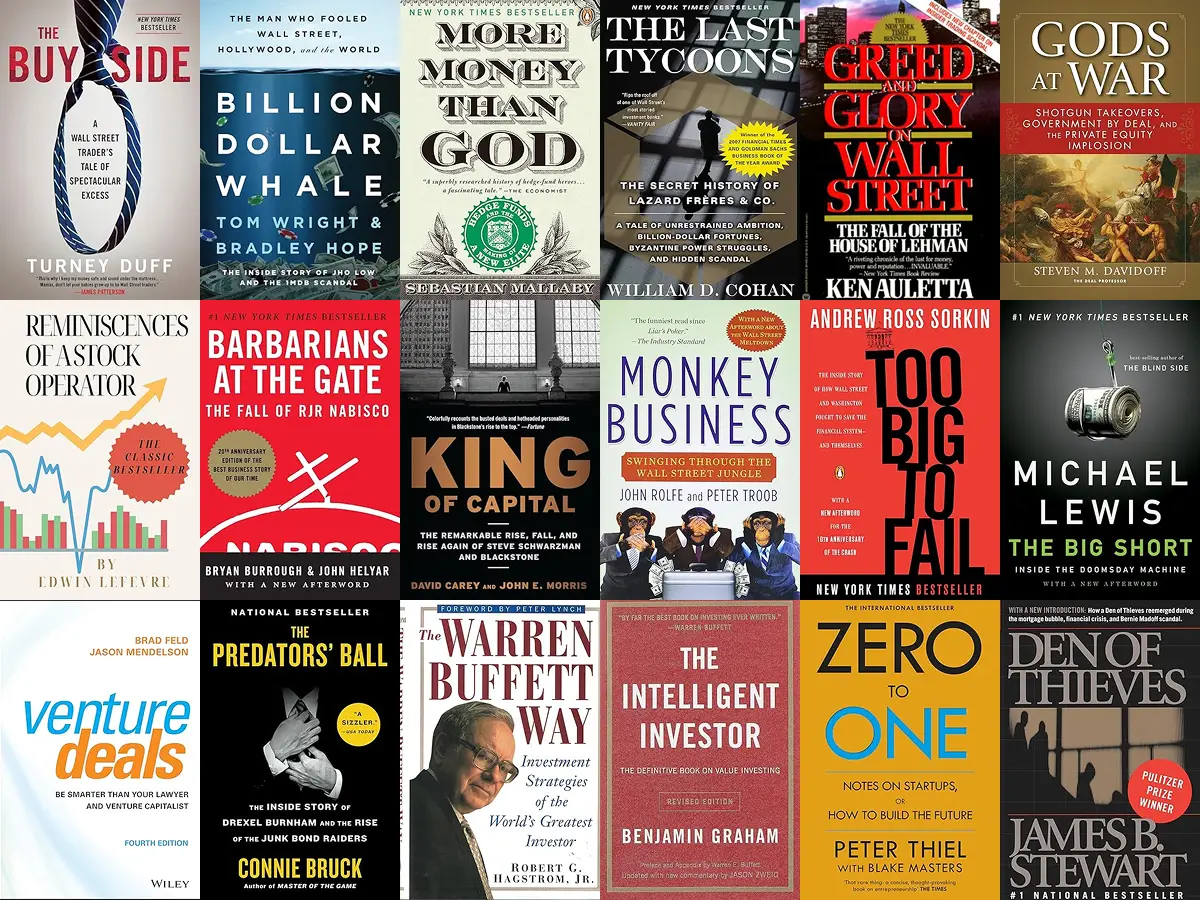
Best Venture Capital Books
Understanding venture capital broadens your perspective beyond traditional banking. These books explain how VC firms evaluate startups, structure deals, and build portfolios, which is increasingly relevant as banks compete with growth-stage investors.
Last updated: February 2026
Key Topics Covered
Term Sheets and Deal Mechanics
Venture Deals is the most comprehensive guide to the mechanics of VC deal-making. Feld and Mendelson walk through every clause in a typical term sheet, explaining what each provision means for both founders and investors. Secrets of Sand Hill Road complements this with the institutional perspective, explaining how VC firms evaluate deals internally and what drives their investment decisions. Together, these two books give you both the technical and strategic understanding of how venture financing works.
Building and Evaluating Companies
Zero to One and The Hard Thing About Hard Things approach the startup world from the builder's perspective rather than the investor's. Thiel lays out a framework for identifying and creating truly innovative businesses, challenging conventional wisdom about competition and market dynamics. Horowitz covers the operational reality of running a company through crises, layoffs, and near-bankruptcy. For anyone evaluating startups as investments, understanding what founders actually go through is essential context.
The History and Evolution of Venture Capital
VC: An American History traces the roots of venture investing back to 19th-century whaling voyages and early industrial financing, drawing parallels between historical risk capital ventures and modern Silicon Valley. It is the most academically rigorous book on the list and provides a perspective on why venture capital developed the way it did, and why the fundamental dynamics of the model have remained remarkably consistent across centuries.
How We Selected These Books
We chose these five venture capital books because each one teaches something distinct. Venture Deals covers the mechanics, Secrets of Sand Hill Road explains the institutional perspective, Zero to One provides the philosophical framework, The Hard Thing About Hard Things addresses operational reality, and VC: An American History puts the entire industry in historical context. Together, they provide a complete education in how venture capital works and why it matters.
Top 5 Venture Capital Books for 2026

Venture Deals: Be Smarter Than Your Lawyer and Venture Capitalist
by Brad Feld & Jason Mendelson

Our Review
The most practically useful VC book that exists. Feld and Mendelson go line by line through real term sheets and explain what every clause actually means: anti-dilution provisions, liquidation preferences, pro-rata rights, board composition, all of it. It is structured more like a reference manual than a narrative, which makes it less fun to read cover to cover but incredibly useful when you need to understand a specific deal mechanic. If you are serious about understanding how venture financing actually works, this is the book to start with.
About This Book
Help take your startup to the next step with the new and revised edition of the popular book on the VC deal process - from the co-founders of the Foundry Group

Secrets of Sand Hill Road: Venture Capital and How to Get It
by Scott Kupor
Our Review
Kupor gives you the Andreessen Horowitz perspective on how VCs evaluate investments, and since a16z has basically redefined how modern VC firms operate, that perspective matters. The strongest chapters are the ones where he explains the mental model behind investment decisions: how VCs think about market size, team quality, and competitive dynamics. It gets a bit self-promotional in places, but the fundraising strategy chapters are genuinely excellent and the institutional perspective is something you rarely get from other VC books.
About This Book
What are venture capitalists saying about your startup behind closed doors? And what can you do to influence that conversation?

Zero to One: Notes on Startups, or How to Build the Future
by Peter Thiel
Our Review
Short, contrarian, and full of ideas that will change how you think about business. Thiel's core argument, that real value comes from creating something new rather than competing in existing markets, is more nuanced than most people give it credit for. His framework for evaluating startups around monopoly potential, proprietary technology, and network effects is genuinely useful. At 224 pages it is an easy read, and the ideas are the kind that stick with you long after you finish. Probably the most thought-provoking book on this list.
About This Book
WHAT VALUABLE COMPANY IS NOBODY BUILDING?

The Hard Thing About Hard Things: Building a Business When There Are No Easy Answers
by Ben Horowitz
Our Review
The most honest book about running a company you will find anywhere. Horowitz writes about the parts of leadership that nobody likes to talk about: firing your friends, making impossible decisions with no good options, nearly going bankrupt, and somehow keeping a team together through all of it. It is raw, practical, and surprisingly funny. Beyond the startup world, this book is valuable for anyone who wants to understand what separates great management teams from average ones, which is ultimately what investing is about, whether you are in VC, PE, or banking.
About This Book
Ben Horowitz, cofounder of Andreessen Horowitz and one of Silicon Valley's most respected and experienced entrepreneurs, offers essential advice on building and running a startup - practical wisdom for managing the toughest problems business school doesn't cover, based on his popular ben's blog.

VC: An American History
by Tom Nicholas
Our Review
An academic history of venture capital that traces the industry's roots all the way back to 19th-century whaling voyages. That sounds dry, but Nicholas draws genuinely fascinating parallels between early risk capital ventures and modern Silicon Valley. The core insight, that the fundamental dynamics of VC (high risk tolerance, portfolio diversification, faith in innovation) have remained remarkably consistent across centuries, gives you a much deeper understanding of why the model works. The most intellectually ambitious book on this list, and one that rewards patient reading.
About This Book
"An incisive history of the venture-capital industry." - New Yorker
How to Approach Venture Capital Books
Venture capital sits at the intersection of finance, technology, and entrepreneurship, and the books on this list reflect that range. Some are practical references (Venture Deals), some are philosophical (Zero to One), some are operational (The Hard Thing About Hard Things), and one is a historical analysis (VC: An American History). The right reading order depends on what angle interests you most.
If you are coming from a traditional finance background, start with Secrets of Sand Hill Road. Kupor writes from an institutional perspective that will feel familiar, and he bridges the gap between the way banks and VC firms think about deals. From there, Venture Deals gives you the technical mechanics of term sheets and deal structures. Zero to One and The Hard Thing About Hard Things are less about VC as an asset class and more about the startup ecosystem that VCs invest in, but understanding that ecosystem is essential to understanding the investment thesis.
VC: An American History is the most academic book on this list and the least practical for day-to-day use, but it provides a depth of historical perspective that the other books do not attempt. If you are interested in venture capital as a system, not just a job, it is the most rewarding read of the five.
Frequently Asked Questions
Want More Interview Prep?
Download the IB IQ app for 1,000+ practice questions and AI mock interviews, or our free interview PDF guide.