Best Essential Finance Books
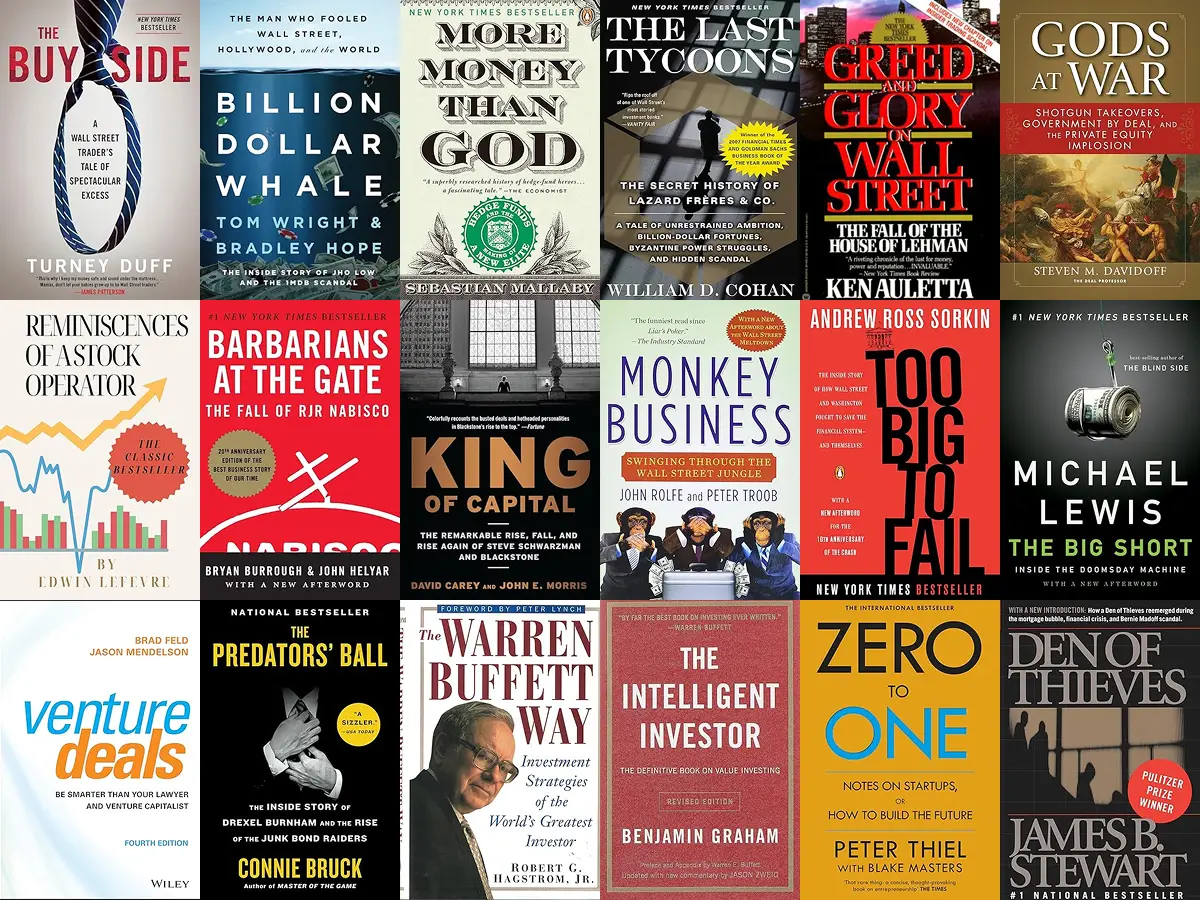
These are the foundational texts that every finance professional references throughout their career. From value investing principles to accounts of market crises, these classics build the broad financial literacy that sets strong candidates apart.
Last updated: February 2026
Key Topics Covered
Value Investing and Fundamental Analysis
The Intelligent Investor and The Warren Buffett Way cover the principles of value investing from both a theoretical and practical perspective. Graham provides the foundational framework, including his concept of margin of safety and his famous Mr. Market analogy. Hagstrom translates those principles into the specific investment decisions that made Buffett the most successful investor in history. Together, they give you a complete picture of how value investing works in theory and in practice.
Financial Crises and Systemic Risk
The Big Short and Too Big to Fail cover the 2008 financial crisis from complementary angles. Lewis focuses on the handful of contrarian investors who saw the crash coming and explains the mechanics of subprime mortgages, CDOs, and credit default swaps through their stories. Sorkin reconstructs the crisis from the top, with unprecedented access to the CEOs, regulators, and politicians who made the critical decisions. Reading both gives you a comprehensive understanding of what went wrong and why.
Market Psychology and Speculation
Reminiscences of a Stock Operator stands apart from the other books on this list. Written in 1923, it is a fictionalized account of the life of Jesse Livermore, one of the most famous speculators in market history. Its observations about crowd behavior, the temptation to overtrade, and the discipline required to be a successful market participant remain as relevant today as when they were first published. It is the rare finance book that is as much about human nature as it is about money.
How We Selected These Books
We selected these five books because each one is a genuine cornerstone of financial education. Together they cover value investing, market crises, investment strategy, and market psychology. These are not niche recommendations. They are the books that experienced professionals consistently name when asked what shaped their thinking about finance.
Top 5 Essential Finance Books for 2026

The Intelligent Investor: The Definitive Book on Value Investing
by Benjamin Graham

Our Review
There is a reason Warren Buffett calls this the best book on investing ever written. Graham's framework for thinking about intrinsic value, margin of safety, and the difference between speculation and investment is genuinely foundational. The book is dense in places, and some of the specific security analysis chapters feel dated, but Chapters 8 and 20 alone are worth the price of admission. The Jason Zweig commentary throughout this edition does a great job connecting Graham's ideas to modern markets. Read it slowly, take notes, and come back to it. This is one of those rare books that gets better every time you revisit it.
About This Book
This classic text is annotated to update Graham's timeless wisdom for today's market conditions.

The Big Short: Inside the Doomsday Machine
by Michael Lewis
Our Review
Michael Lewis has a gift for making complicated financial mechanics feel like a heist movie, and The Big Short is his best work. He follows a handful of contrarian investors who saw the subprime crisis coming when nobody else did, and through their stories he explains CDOs, credit default swaps, and mortgage-backed securities in a way that is genuinely fun to read. The movie is great, but the book goes deeper on the mechanics and gives you a much better understanding of what actually went wrong. One of the best pieces of financial journalism ever written.
About This Book
The #1 New York Times bestseller: 'It is the work of our greatest financial journalist, at the top of his game. And it's essential reading.' - Graydon Carter, Vanity Fair.

Reminiscences of a Stock Operator
by Edwin Lefevre
Our Review
Written in 1923 and still one of the most relevant books about markets you can read. Livermore's observations about crowd behavior, the temptation to overtrade, and the discipline required to sit on your hands when everyone else is panicking are timeless. It reads like a novel, which is part of its charm. The lessons are more relevant to trading and investing than to banking specifically, but anyone who works in finance should understand market psychology, and nobody has written about it better than Lefevre through Livermore's eyes.
About This Book
'Reminiscences Of A Stock Operator' is a timeless classic that offers a rare and fascinating glimpse into the world of finance and trading. Written by Edwin Lefevre, this book tells the story of Jesse Livermore, a legendary speculator who rose from humble beginnings to become one of the most successful and infamous traders of his time.

Too Big to Fail: The Inside Story of How Wall Street and Washington Fought to Save the Financial System-and Themselves
by Andrew Ross Sorkin
Our Review
The definitive account of the 2008 financial crisis. Sorkin had extraordinary access to the key players, from Hank Paulson to Jamie Dimon to Dick Fuld, and he reconstructs the critical decisions almost in real time. What makes this book special is how it captures the human side of the crisis: the fear, the ego, the political maneuvering. The chapters on the Lehman collapse and the AIG bailout are particularly gripping. It is a long book, but it moves fast because every chapter feels urgent. Essential reading for understanding how interconnected the modern financial system really is.
About This Book
The brilliantly reported New York Times bestseller that goes behind the scenes of the financial crisis on Wall Street and in Washington to give the definitive account of the crisis, the basis for the HBO film.

The Warren Buffett Way: Investment Strategies of the World's Greatest Investor
by Robert Hagstrom
Our Review
A clear, well-organized breakdown of how Warren Buffett actually thinks about investments. Hagstrom walks through Buffett's major bets and explains the reasoning behind each one, including his business tenets, financial tenets, and management tenets. It is less philosophical than The Intelligent Investor and more practical, focused on how Buffett applies value investing principles to specific companies. If you have already read Graham, this is the natural next step. A quick read at under 300 pages, and a useful framework for organizing your own thinking about what makes a business worth investing in.
About This Book
'Simply the most important new stock book of the 1990s, to date. Buy it and read it.' - Kenneth L. Fisher Forbes
Building Your Finance Reading Foundation
These five books cover a wide range of financial topics, from value investing theory to crisis narratives to market psychology. The question is not whether to read them, but in what order and how deeply to engage with each one.
If you are new to finance, start with The Big Short or Too Big to Fail. Both are narrative-driven and require no technical background. They will give you a visceral understanding of how financial markets work, how they can fail, and why the concepts you learn in textbooks actually matter. From there, move to The Intelligent Investor for the foundational framework on value investing, and then to The Warren Buffett Way for a more practical application of those principles.
Reminiscences of a Stock Operator is the wildcard on this list. It is over 100 years old, reads like a novel, and is more relevant to trading and market psychology than to banking or investing in the Graham-Buffett tradition. That said, the insights about discipline, patience, and crowd behavior are universal. It is the kind of book you read for perspective, not for a specific methodology. If you are the type of reader who enjoys understanding why markets behave the way they do, put it near the top of your list.
Frequently Asked Questions
Want More Interview Prep?
Download the IB IQ app for 1,000+ practice questions and AI mock interviews, or our free interview PDF guide.